

Verfasst vonMo Kahnam


Mehr als8.000 Selbstporträts in der westlichen Kunstwurden untersucht, und die stärksten surrealen Selbstporträt-Ideen folgen immer noch einer einfachen Regel: Man kombiniere eine klare Transformation, eine kontrollierte Stimmung und eine fokussierte Farbpalette. Mit einem erkennbaren Selfie und einem prägnanten Prompt können Sie mit starryai diese Kombinationen schnell testen, anstatt jeden Effekt von Hand zu erstellen.
Surreales Selbstporträtieren ist mehr als das Hinzufügen eines ungewöhnlichen Filters. Das Gesicht muss erkennbar bleiben, während eine dominante visuelle Veränderung dem Bild seine Bedeutung verleiht. Eine Galaxie kann spirituelle Größe suggerieren, Stoff für Handwerkskunst und Erinnerung stehen und ein zerbrochenes Gesicht parallele Identitäten andeuten.
Dieser Ansatz hat tiefe Wurzeln. André BretonsSurrealistisches Manifest von 1924definierte den Surrealismus als „psychischen Automatismus in seinem reinen Zustand“, und Künstler wie Frida Kahlo, Salvador Dalí, Leonora Carrington und Remedios Varo betrachteten das Selbstporträt als einen Ort für Metamorphose und psychologische Narration. In den 1930er und 1940er Jahren waren surrealistische Selbstporträtfotografie und -malerei zu einem erkennbaren künstlerischen Modus geworden und nicht mehr nur ein isoliertes Experiment.Diese Geschichte surrealistischer Selbstporträtshilft zu erklären, warum die heutigen KI-Transformationen sich mit einer älteren künstlerischen Sprache verbunden anfühlen.
Die zehn Ideen unten vergleichen kreative Wirkung, Gesichtsreinheit, visuelle Komplexität und praktischen Nutzen. Jede enthält eine Stimmungsrichtung, Palettenlogik, ein Selfie-Setup, Prompt-Taktiken und ein realistisches Szenario für die Verwendung des fertigen Bildes. Für eine breitere Referenz zu Selbstporträts erkunden Sie dieSammlung „Masters Remastered“.
Ein himmlisches Selbstporträt funktioniert, weil es das Gesicht zu einem Teil einer größeren visuellen Welt macht. Anstatt eine Person vor Sternen zu platzieren, verschmelzen Sie Haut, Haare oder Augen mit Nebeln, sodass es scheint, als würde das Subjekt das Universum in sich tragen. Die Transformation wirkt expansiv, mystisch und ist sofort lesbar, wenn Augen und Gesichts Umrisse klar bleiben.
Verwenden Sie ein gut beleuchtetes, nach vorne gerichtetes Selfie mit sichtbaren Gesichtszügen und einem ruhigen Ausdruck. Ein dunkler Hintergrund gibt den Sternen Raum zum Leuchten, während Violett, Blau und Pink eine weiche kosmische Palette erzeugen. Halten Sie eine Farbe dominant und verwenden Sie die anderen als Akzente im Nebel und im reflektierten Licht.
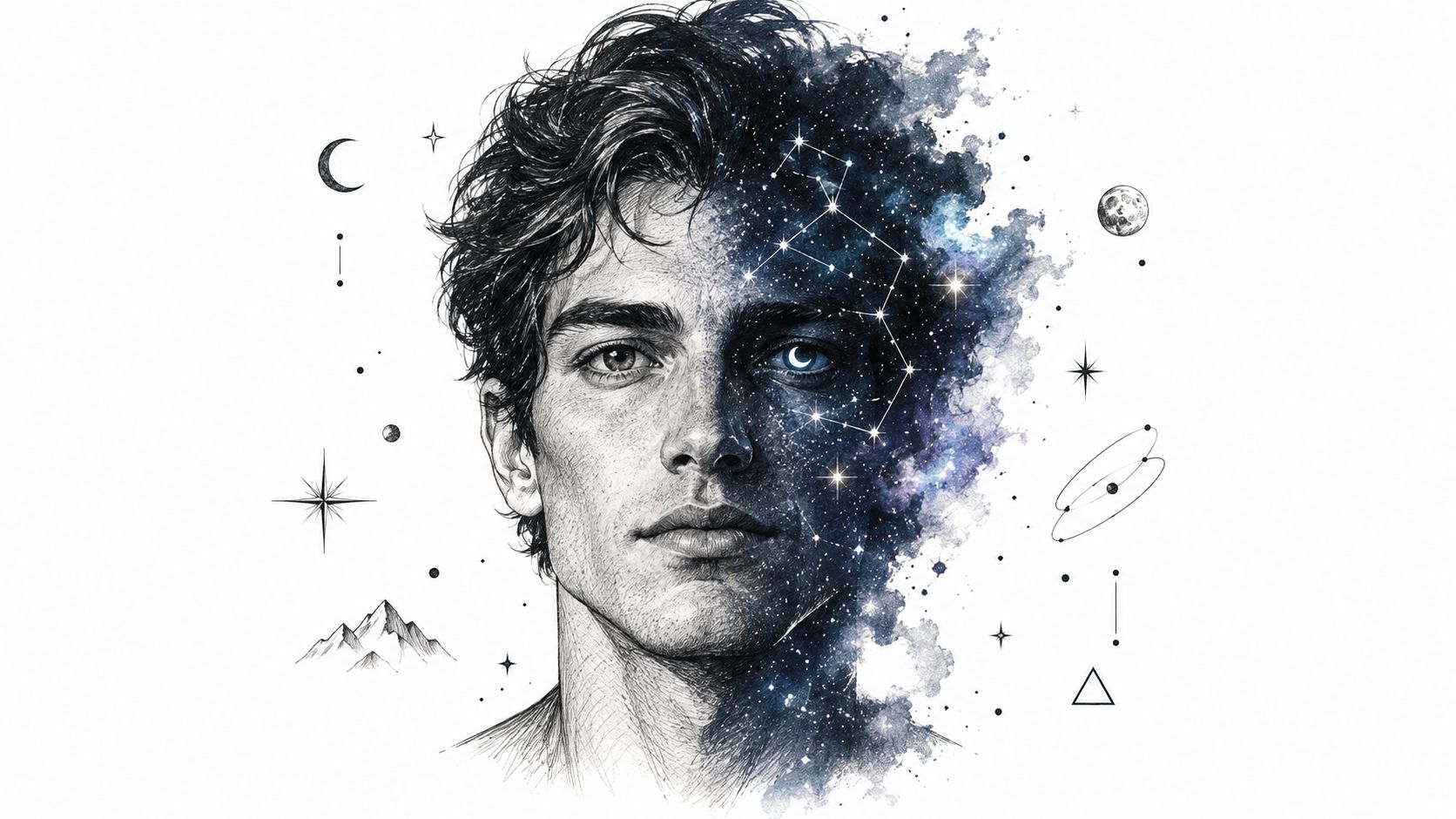
Beginnen Sie mit dem Subjekt und der Transformation und definieren Sie dann Stimmung und Komposition. Eine nützliche Prompt-Struktur ist: „erkennbares Selbstporträt, Gesicht verschmilzt mit einem violetten Nebel, Sterne fließen durch das Haar, ruhige mystische Stimmung, zentrierte Komposition, weiches Kantenlicht, detaillierte Augen“. Vermeiden Sie das Hinzufügen mehrerer nicht zusammenhängender Effekte. Die Galaxie ist bereits die Hauptidee.
Dieses Konzept eignet sich für TikTok-Transformationsvideos, Charakterentwicklung für Paranormal-Romance, Fantasy-RPG-Avatare und Wellness-Inhalte, die den Ersteller als reflektierenden oder spirituellen Führer präsentieren. Das Ergebnis mit mystischer Musik zu untermalen kann ein kurzes Video verstärken, während ein quadratischer Zuschnitt gut für ein Gaming-Profil funktioniert.
Für mehr Kontrolle über ein auf einem Selfie basierendes Ergebnis verwenden Sie denstarryai KI-Selfie-Bildgeneratorund beschreiben Sie genau, wo das kosmische Material erscheinen soll. Sie können auch mondbeleuchtete visuelle Waren erkunden durch dieLoyaltie Marktplatz für handgefertigtes Dekor.
Praktische Regel:Schützen Sie zuerst die Augen. Wenn die Sterne sie überfordern, reduzieren Sie den kosmischen Effekt, bevor Sie die Palette ändern.
Fraktionierten Porträts erzeugen Wirkung durch Wiederholung und Trennung. Ein Gesicht wird zu mehreren Ebenen, Ausdrücken oder parallelen Versionen, sodass der Betrachter das Bild eher als visuelles Rätsel denn als standardmäßiges Porträt liest. Die Idee funktioniert am besten, wenn die Geometrie eine klare Struktur aufweist, wie etwa einen diagonalen Split, eine facettierte Maske oder einen kleinen Satz sich wiederholender Paneele.
Machen Sie ein Selfie mit einem mutigen Ausdruck und relativ einfacher Kleidung. Ein direkter Blick, eine hochgezogene Augenbraue oder ein Ausdruck mit geöffnetem Mund verleihen jedem Fragment ein starkes emotionales Signal. Beginnen Sie mit zwei oder drei großen geometrischen Ebenen, bevor Sie eine dichte, kaleidoskopische Anordnung ausprobieren.
Wählen Sie Komplementärfarben, um die Unterteilungen offensichtlich zu machen. Beispielsweise erzeugt ein warmes orangefarbenes Gesicht vor tiefblauen Ebenen Spannung, während Violett und Gelb ein elektrischeres Ergebnis erzielen. Halten Sie den Hintergrund ruhig, damit die fraktionierte Struktur nicht im visuellen Rauschen verschwindet.
Ein Prompt sollte sowohl das Layout als auch den emotionalen Kontrast angeben: „Erkennbares Selbstporträt, unterteilt in geometrische Ebenen, drei parallele Realitäten, ein ruhiger und ein intensiver Ausdruck, winklige Collage, komplementäre Orange- und Blaupalette, scharfe Studiobeleuchtung.“ Wörter wie „saubere Trennung“, „facettierte Ebenen“ und „kontrollierte Symmetrie“ helfen, ein unklares Ergebnis zu verhindern.
Das fertige Bild kann zum Album-Artwork für einen Indie-Musiker, einem Tabletop-RPG-Charakterporträt oder einer Grafik für psychedelische und elektronische Musik werden. Es lässt sich auch gut auf Shirts und Hoodies übertragen, da kräftige Formen nach dem Zuschneiden lesbar bleiben.
Ein einfaches geometrisches Muster ist nützlicher als ein überladener Prompt. Sobald die Struktur funktioniert, fügen Sie eine zweite Dimension, gespiegelte Merkmale oder einen komplexeren Hintergrund hinzu.
Natur-Verschmelzung lässt ein surreales Porträt organisch statt mechanisch wirken. Blumen, Rinde, Wasser, Blätter oder Wildtiere können aus dem Haaransatz wachsen, den Wangenknochen folgen oder Teile des Hintergrunds ersetzen. Die visuelle Logik ist am stärksten, wenn sich das natürliche Element mit den vorhandenen Farben des Subjekts verbindet, anstatt als zufällige Dekoration zu erscheinen.
Ein Outdoor-Selfie bietet Ihnen einen nützlichen Ausgangspunkt für Farbharmonie. Passen Sie Blumen an die Kleidung an, verwenden Sie Blätter, die die Haarfarbe widerspiegeln, oder wählen Sie Wassertöne, die die Augen unterstützen. Ein sanfter Ausdruck und sanftes Tageslicht passen zu einem atmosphärischen Ergebnis, während ein direkter Blick das Porträt zielgerichteter und aktivistischer wirken lassen kann.
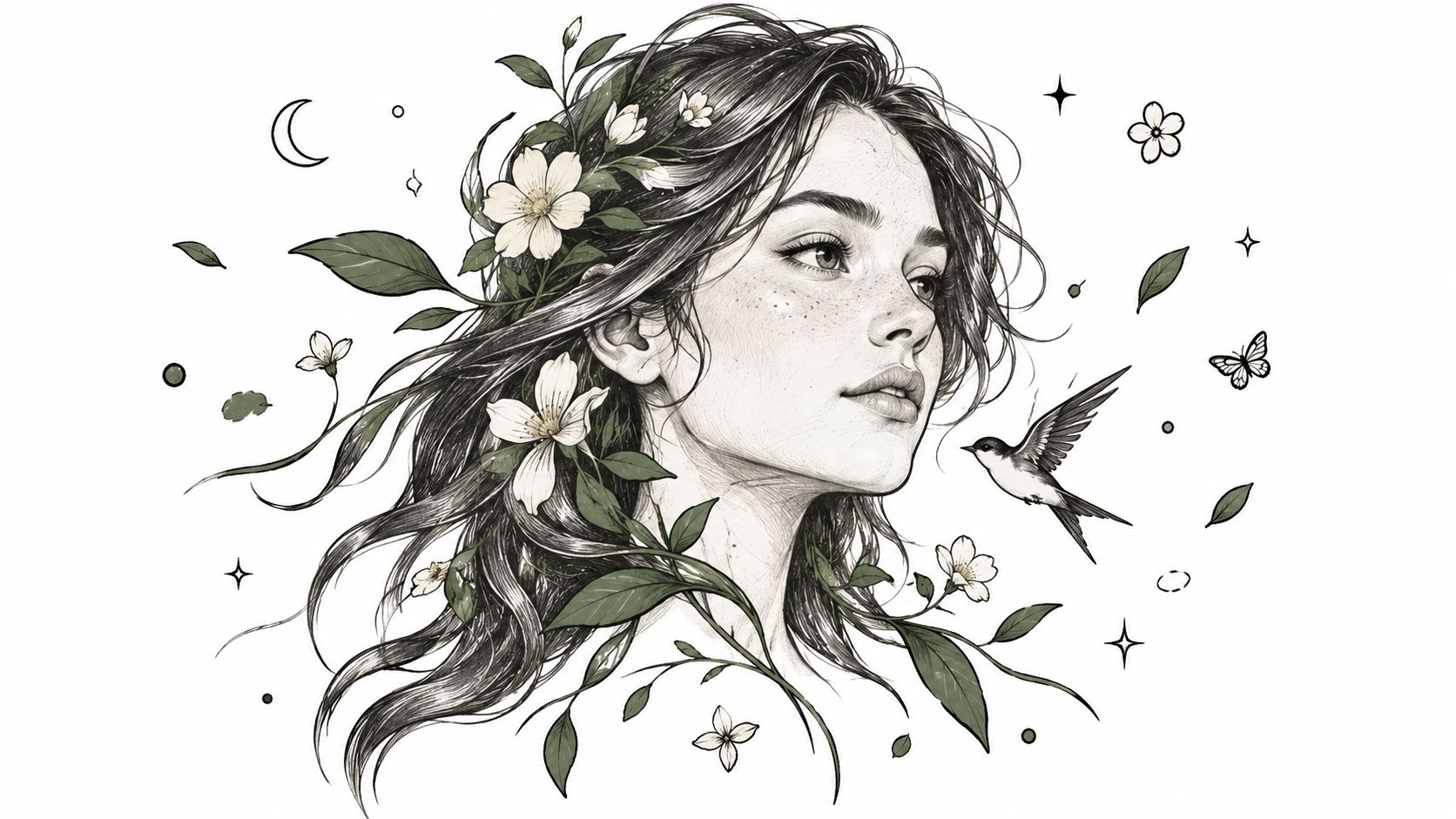
Verwenden Sie einen Prompt, der die Beziehung zwischen Mensch und Natur erklärt: „Erkennbares Selbstporträt, das mit Farnblättern und Wildblumen verschmilzt, kleiner Vogel in der Nähe der Schulter, organischer Übergang durch das Haar, friedliche Waldstimmung, gedämpfte Grün- und Bernsteinpalette, natürliches weiches Licht.“ Geben Sie an, ob die Pflanzen das Gesicht umrahmen, eine Seite bedecken oder sich in den Hintergrund erstrecken sollen.
Dieses Konzept gibt Umweltkreativen, Öko-Influencern und Wellness-Marken eine visuelle Sprache für natürliche Schönheit. Ein Fantasy-Autor könnte es als frühe Charakterkunst verwenden, während ein Etsy-Verkäufer saisonale Druckkollektionen rund um Herbstlaub oder Frühlingsblumen entwickeln könnte.
Lassen Sie das natürliche Element die Struktur des Porträts verändern, anstatt nur dessen Ränder zu schmücken.
Glitch-Art verwandelt Identität in instabile digitale Informationen.Pixelverschiebung, kaputte Farbkanäle, Scanlines und scharfe Schnitte lassen das Porträt übertragen, beschädigt oder rekonstruiert wirken. Der Effekt funktioniert, weil kontrollierter Schaden Spannung erzeugt, während ein erkennbares Gesicht das Bild persönlich hält.
Beginnen Sie mit einem klaren Selfie, moderner Kleidung und starkem Kontrast. Ein dunkles Shirt, reflektierender Stoff oder eine definierte Silhouette geben den Artefakten eine saubere Form zum Unterbrechen. Rot- und Zyan-Trennung wirkt unmittelbar und energetisch. Grün, Schwarz und Elektrikblau erzeugen eine kältere Cyberpunk-Stimmung.
Verwenden Sie zuerst eine moderate Einstellung: „Erkennbares Cyberpunk-Selbstporträt, moderate Glitch-Verzerrung, chromatische Aberration um Haar und Schultern, verschobene Pixel, dunkler Stadthintergrund, Zyan- und Magenta-Akzente, scharfe futuristische Beleuchtung.“ Halten Sie Augen, Nase und Mund intakt und platzieren Sie die Verzerrung dann um Haar, Schultern oder Hintergrund. Wenn starryai zu viel vom Gesicht zerlegt, ersetzen Sie „heavier glitch“ (schwerer Glitch) durch „localized glitch accents“ (lokalisierte Glitch-Akzente).
Ein Gaming-Streamer kann das Porträt für einen Kanal-Avatar oder Stream-Overlay anpassen. Elektronische Musiker können es für Synthwave-Artworks verwenden, und ein Technologiegründer kann eine zurückhaltende Version für ein Profilbild wählen. Es passt auch zu einer TikTok-Serie über digitale Identität, in der jede Variation ein anderes Niveau digitaler Interferenz darstellt.
Für Prompt-Variationen und präzisere Formulierungen verwenden Siestarryai KI-Bildgenerator-Prompts. Ändern Sie jeweils eine Anweisung, wie etwa stärkere Scanlines oder einen helleren Hintergrund, damit Sie identifizieren können, welches Prompt-Detail das Ergebnis verändert.
Die flüssige Transformation funktioniert durch den Verlust fester Grenzen. Das Gesicht scheint sich in Aquarell, Tinte, Farbe, Rauch oder fließendes Wasser aufzulösen, wodurch eine Stimmung entsteht, die emotional und vergänglich wirkt. Im Gegensatz zur Glitch-Art, die das Porträt in harte digitale Fragmente zerlegt, erzeugen flüssige Effekte weiche Übergänge, die ein Gefühl von Intimität bewahren können.
Verwenden Sie kontrastreiche Beleuchtung im Selfie, damit das Gesicht ein klareres tonales Fundament hat. Eine Dreiviertelpose kann bewirken, dass die Flüssigkeit in eine Richtung zu fließen scheint, während ein nach vorne gerichtetes Porträt einen symmetrischen Schmelzeffekt erzeugt. Kühle Blautöne deuten auf Ruhe oder Distanz hin, warme Rote auf Leidenschaft oder Dringlichkeit.
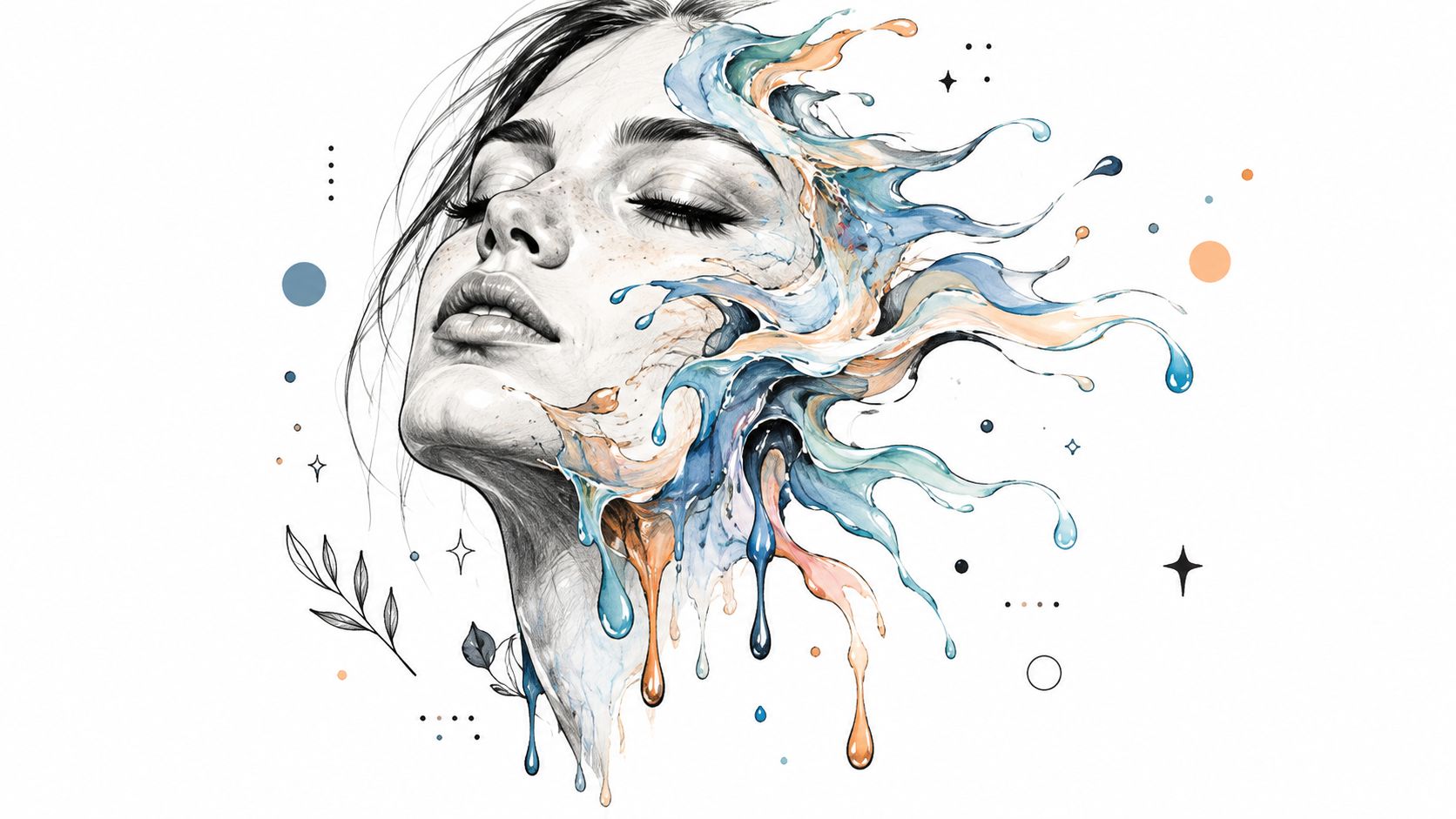
Beschreiben Sie Material, Richtung und emotionale Tonalität in dieser Reihenfolge: „Erkennbares Selbstporträt, das sich in fließendem blauen Aquarell auflöst, flüssige Ränder, die sich von der Wange in den Hintergrund bewegen, ruhige reflektierende Stimmung, kontrastreiche Porträtbeleuchtung, Papierstruktur, begrenzte Blau- und Silberpalette.“ Wenn Sie Tinte wünschen, sagen Sie „nasse, schwarze Tintenblüten“. Wenn Sie Farbe wünschen, benennen Sie das Finish wie transluzente Gouache oder dicke Acrylfarbe.
Fantasy- und Paranormal-Romance-Autoren können diesen Stil für atmosphärische Charakterkonzepte oder Cover-Explorationen verwenden. Bildende Künstler können Portfolio-Studien erstellen und Wellness-Marken können weiche Flüssigkeitsporträts neben poetischen Bildunterschriften verwenden.
Ein einzelnes Material wirkt meistens zielgerichteter als eine Mischung aus Wasser, Rauch, Farbe und Glas. Wählen Sie die Substanz, die am besten zu der Geschichte passt, die das Gesicht erzählen soll.
Kaleidoskop-Porträts verwandeln persönliche Identität in Muster. Gespiegelte Abschnitte des Gesichtes werden zu einem mandalaartigen Design, sodass das Bild sowohl als Porträt als auch als abstraktes Kunstwerk fungieren kann. Symmetrie erzeugt Ruhe und Ordnung, während kontrollierte Asymmetrie Bewegung und emotionale Spannung einbringt.
Verwenden Sie ein zentriertes, nach vorne gerichtetes Selfie mit gleichmäßiger Beleuchtung. Halten Sie den Hintergrund einfach und vermeiden Sie auffälligen Schmuck oder Kleidung, da wiederholte Details schnell mit dem Gesicht konkurrieren können. Eine Palette aus Indigo, Gold und Creme verleiht dem Design ein zeremonielles Gefühl, während Koralle, Türkis und Violett festlicher wirken.
Ein Prompt kann das Muster etablieren, bevor Dekoration hinzugefügt wird: „Zentriertes, erkennbares Selbstporträt, transformiert in ein symmetrisches Kaleidoskop, gespiegelte Gesichtsabschnitte, die ein Mandala bilden, präzise radiale Geometrie, Indigo- und Goldpalette, sauberer dunkler Hintergrund, detailliert, aber ausgewogen.“ Sie können dann eine asymmetrische Version anfordern, wenn sich das erste Ergebnis zu statisch anfühlt.
Yoga- und Meditations-Apps können das Bild für Kampagnen-Artworks verwenden und Etsy-Verkäufer können es in spirituelle Merchandise-Artikel adaptieren. Festival-Organisatoren und Musiker können das Porträt auch als Plakatmotiv verwenden. Passende Variationen können eine stimmige Kollektion erzeugen, ohne dass jedes Bild dieselbe Komposition aufweisen muss.
Die stärksten Versionen behalten ein erkennbares Merkmal wie die Augen oder den Mund in der Mitte bei. Dieser Anker hält das Muster persönlich, anstatt es in ein generisches Ornament zu verwandeln.
Ein Porträt mit dualer Entität erzählt eine Geschichte durch Kontrast. Eine Seite könnte realistisch und die andere mythisch sein, oder eine Version könnte fröhlich wirken, während die andere wachsam aussieht. Der Betrachter versteckt das Konzept schnell, da die Komposition zwei Identitäten ein gemeinsames Gesicht und eine sichtbare Grenze verleiht.
Machen Sie ein Selfie mit ausgewogener Beleuchtung und einer neutralen oder ausdrucksstarken Pose. Entscheiden Sie, was der Kontrast bedeutet, bevor Sie den Prompt schreiben. „Licht und Schatten“ ist breit gefasst, aber „öffentliches Selbstvertrauen und private Verletzlichkeit“ gibt dem Bild eine klarere emotionale Richtung.
Eine Split-Screen-Komposition ist nützlich, da sie die beiden Zustände trennt, ohne die Verbindung zwischen ihnen zu verlieren. Verwenden Sie komplementäre Stimmungen und verwandte Farben wie warmes Gold auf der einen und kühles Blau auf der anderen Seite. Eine schmale Übergangszone kann darauf hindeuten, dass sich die Identitäten verändern, anstatt dauerhaft getrennt zu sein.
Versuchen Sie: „Erkennbares Selbstporträt, vertikal in zwei Entitäten geteilt, eine realistisch und ruhig, eine mythisch und sturmbeleuchtet, gemeinsame Augen, klare Trennung, Gold- und Indigopalette, dramatische Seitenbeleuchtung, psychologischer Editorial-Stil.“ Halten Sie das Gesicht über beide Hälften hinweg ausgerichtet, damit der Betrachter sie vergleichen kann.
Dieser Ansatz eignet sich für Thriller- und psychologische Romancover, identitätsbezogenes Musik-Branding und Kampagnen zur Sensibilisierung für psychische Gesundheit, die eher eine visuelle Metapher als eine wörtliche Illustration benötigen. TikTok-Ersteller können es auch für Transformationsvideos mit Bildunterschriften verwenden, die erklären, was jede Seite darstellt.
Kompositionstest:Decken Sie eine Hälfte des Bildes ab. Wenn die verbleibende Hälfte immer noch eine klare Stimmung hat, leistet Ihr Kontrast nützliche narrative Arbeit.
Biolumineszierende Porträts lassen das Subjekt so erscheinen, als würde es Licht von innen abstrahieren. Neon-Ränder, phosphoreszierende Haut und schwebende Lichtspuren können ein vertrautes Gesicht in eine übernatürliche oder futuristische Präsenz verwandeln. Der Effekt hängt vom Kontrast ab, weshalb ein dunkler Hintergrund wichtiger ist als das Hinzufügen von mehr Leuchten.
Wählen Sie ein Selfie mit einer klaren Silhouette und Kleidung, die das Konzept unterstützt. Eine schwarze Jacke, reflektierende Einfassungen oder ein futuristisches Accessoire können dazu beitragen, dass sich das generierte Licht am Körper angebracht anfühlt. Zyan, Violett und Acid-Grün deuten auf ein Cyberpunk-Setting hin, während Bernstein und Rose eine wärmere magische Atmosphäre erzeugen.
Ein Prompt sollte die Lichtquelle definieren: „Erkennbares Selbstporträt, das Zyan-Licht aus den Augen und dem Schlüsselbein abgibt, dezente phosphoreszierende Haut, dünne Lichtspuren um die Schultern, dunkler futuristischer Hintergrund, zurückhaltende Neonpalette, cinematische Kantenbeleuchtung.“ „Dezent“ und „lokalisiert“ können verhindern, dass das Leuchten die Gesichtszüge bedeckt.
Gaming-Streamer und E-Sport-Spieler können eine kontrastreiche Version für das Kanal-Branding verwenden. Elektronische und Synthpop-Musiker können Album-Artworks aus derselben visuellen Sprache entwickeln, während eine Technologiemarke ein zurückhaltendes Porträt mit einem leuchtenden Akzent bevorzugt. Das Konzept passt auch zu nächtlichen Social-Media-Beiträgen, bei denen das dunkle Setting die Illusion von internem Licht unterstützt.
Verlangen Sie nicht alle Neonfarben auf einmal. Wählen Sie einen Hauptleuchteffekt und einen unterstützenden Akzent, passen Sie dann den Hintergrund an, bevor Sie den Effekt verstärken.
Eine mythologische Transformation funktioniert, weil sie dem Porträt eine übertragene Geschichte verleiht. Hörner, Flügel, Kronen, Masken und Auren sind nicht nur dekorative Ergänzungen, wenn sie eine Rolle wie Gottheit, Wächter, Trickster oder Unterweltführer kennzeichnen. Das Gesicht bleibt erkennbar, während die umgebenden Symbole seinen Status verändern.
Beginnen Sie mit einer spezifischen mythologischen Richtung anstelle einer vagen Anfrage nach einem Fantasy-Charakter. Recherchieren Sie die visuelle Sprache der Tradition, auf die Sie sich beziehen möchten, und wählen Sie dann Symbole und Farben, die diese unterstützen. Dramatische Beleuchtung im Selfie sorgt dafür, dass generierte Flügel, Hörner oder metallische Details sich mit dem Gesicht verbunden anfühlen.
Verwenden Sie einen Prompt wie: „Erkennbares Selbstporträt als Mondwächter, Silberkrone, dezente gefiederte Flügel, leuchtende Mondsichel-Aura, ernster Ausdruck, tiefblaue und silberne Palette, dramatisches Seitenlicht, detaillierte Fantasy-Charakterkunst.“ Ersetzen Sie die Rolle und die Symbole durch ein Konzept, das zu Ihrer Geschichte passt. Ein spezifischer Worldbuilding-Ansatz verleiht dem Bild mehr Kohärenz als eine lange Liste von Fantasy-Objekten.
Fantasy-Romance-Autoren können das Ergebnis für die Charakterentwicklung und Cover-Erschließung nutzen. Tabletop-RPG-Spieler können benutzerdefinierte Charaktere visualisieren, während Indie-Spieleentwickler und Comic-Schöpfer eine konsistente Liste von Porträts erstellen können.
Halten Sie kulturelle Symbole spezifisch und respektvoll. Wenn sich das Porträt auf eine lebendige Tradition bezieht, vermeiden Sie es, heilige Bildsprache wie ein zufälliges Kostüm zu behandeln. Die stärkste Metamorphose beginnt mit einer Charakterrolle und wählt dann visuelle Details aus, die diese vermitteln.
Textilporträts ersetzen digitale Glätte durch materielle Evidenz. Das Gesicht kann gewebt, bestickt, gestrickt, gesteppt oder aus Stoff zusammengesetzt erscheinen, wodurch sich das Bild taktil und handgemacht anfühlt. Diese Transformation ist besonders effektiv, wenn das Muster den Gesichtskonturen folgt, anstatt flach als Textur über der Haut zu liegen.
Verwenden Sie ein gut fokussiertes Selfie mit sichtbaren Konturen und einem einfachen Hintergrund. Warmes Rostbraun, Ocker, Creme und gedämpftes Rot erzeugen eine zugängliche Handwerksästhetik, während Schwarz, Weiß und eine einzige Akzentfarbe edler wirken können. Passen Sie das Textil an die beabsichtigte Identität an, wie Patchwork für Erinnerung, Stickerei für Details oder grobes Gewebe für eine rustikale Marke.
Ein Prompt könnte lauten: „Erkennbares Selbstporträt aus besticktem Stoff und sichtbarem Faden, Gesichtskonturen erhalten, handgesticktes Blumenmuster, warme Ocker- und Cremepalette, weiches Studiolicht, taktile Handwerkstextur.“ Wenn das Ergebnis das Gesicht verliert, fügen Sie hinzu: „klare Augen, lesbarer Mund, Porträtschärfe, Stoff folgt der Gesichtsstruktur.“
Etsy-Verkäufer können das Konzept für handgemachte Artikel nutzen, während Faserkünstler das generierte Porträt mit „Blick hinter die Kulissen“-Videos kombinieren können. Nachhaltige Modemarken können ein materialbasiertes Profilbild entwickeln und Kreative im Handwerksbereich können es für TikTok- oder YouTube-Thumbnails verwenden.
Verwenden Sie diestarryai-Bild-zu-Prompt-Anleitung, um zu untersuchen, welche visuellen Details bei einer Textilreferenz wichtig sind, und übersetzen Sie diese Details dann in einen Selfie-Prompt. Das Ziel ist nicht, „Stoff“ als abschließendes Adjektiv hinzuzufügen. Es geht darum, das Gewebe, das Muster, die Beleuchtung und die erhaltene Gesichtsstruktur zu spezifizieren.
| Stil | 🔄 Implementierungskomplexität | ⚡ Ressourcen- und Zeiteffizienz | 📊 Erwartetes Ergebnis / Wirkung | 💡 Ideale Anwendungsfälle | ⭐ Hauptvorteile |
|---|---|---|---|---|---|
| Himmlisches Spiegel-Selbst | Mittel, Gesichtsmapping + Weltraum-Textur-Überblendung | Mittel, benötigt gut ausgeleuchtetes Selfie und Farbanpassungen | Hohe visuelle Wirkung; mystisch, gut teilbar; feine Details können verloren gehen | Social Media, Spiritualitäts-/Wellness-Branding, Fantasy-Avatare | Erweckt kosmische Ästhetik; sehr gut teilbar |
| Fraktioniertes Dimensions-Selbst | Hoch, geometrische Replikation & 3D-Illusionseffekte | Gering bis mittel, iterative Farb- und Layout-Anpassungen erforderlich | Mutig, originell, gesprächsanregend; kann visuell chaotisch wirken | Albumcover, Gaming-/Fantasy-Branding, psychedelische Kunst | Komplexer Look mit hohem Aufwand; herausragende Originalität |
| Natur-Fusion-Selbst | Mittel, nahtlose Integration von Flora/Fauna mit Porträt | Mittel, Outdoor-Selfies bevorzugt; Farbharmonie erforderlich | Visuell ansprechend und ökologisch resonant; Naturelemente können Merkmale verdecken | Umweltkampagnen, Buchcover, Etsy-Drucke | Organisch, vielseitig, Instagram-freundlich |
| Glitch-Art-Selbst | Gering bis mittel, Verzerrungsregler und Kanalverschiebungen | Hoch, schnell zu produzieren; minimales Bearbeitungs-Know-how erforderlich | Trendig, edgy, sehr gut teilbar; Risiko, dass es überstrapaziert wirkt | Tech-/Gaming-Kanäle, Synthwave-Musik, Kurzvideos (Reels) | Schnell zu erstellen; algorithmusfreundliche moderne Ästhetik |
| Ätherisches Flüssigkeits-Selbst | Mittel, Flüssigkeits-Rendering und weiche Übergänge | Mittel, profitiert von kontrastreichem Originalfoto | Galeriewürdig, poetisch und emotiv; weniger für den geschäftlichen Einsatz geeignet | Buchcover, Künstlerportfolios, Wellness/Content mit Stimmung | Elegant, emotive, high perceived quality |
| Kaleidoskop-Selbstidentität | Mittel bis hoch, Symmetriekonfiguration und Musterbildung | Mittel, zentrierte Selfies funktionieren am besten; Bedenken hinsichtlich der Skalierung | Meditative, faszinierende Muster; können repetitiv werden | Meditations-Apps, Festival-Grafiken, Merchandise-Drucke | Personalisierte, mandalaartige Designs; starkes Merchandising-Potenzial |
| Duales Entitäten-Selbst | Hoch, geteilte Komposition und weiche Übergangsüberblendung | Gering bis mittel, konzeptlastig; erfordert klare Ausrichtung | Konzeptionell stark und erzählerisch; kann ohne Kontext verwirren | Thriller-Cover, Kampagnen zur psychischen Gesundheit, Storytelling-Beiträge | Tief erzählerische und emotional ansprechende Bildsprache |
| Biolumineszentes Selbst | Gering bis mittel, Leuchteffekte und Farbbestimmung | Hoch, schnelle Ergebnisse, funktioniert gut bei Fotos bei wenig Licht | Markante, futuristische Wirkung; übermäßiges Leuchten kann das Gesicht verdecken | Gaming-Kanäle, Synthpop-/Elektronik-Künstler, nächtliche Inhalte | Hohe visuelle Wirkung; hochwertiger, moderner Look |
| Mythologisches Metamorphose-Selbst | Hoch, detaillierte Elementintegration und kulturelle Auswahl | Gring, Recherche und spezifische Ausrichtung oft erforderlich | Kraftvolle Fantasy-Charakterkunst; Risiko von Unordnung oder generischen Ergebnissen | Fantasy-Buchcover, RPG-Charakterkunst, Konzeptdesign | Charaktergrafiken in Professional-Qualität; starker erzählerischer Reiz |
| Textil- und Muster-Selbst | Mittel, Stoff-/Textilwiedergabe und Mustermapping | Mittel, sorgfältige Farb- und Musterauswahl erforderlich | Warmherzige, haptische Ästhetik; komplexe Muster können Details verbergen | Etsy-/Produktlistings, Werbeaktionen für Faser-Künstler, saisonale Kampagnen | Zugänglicher Handmade-Vibe; hervorragend für Bastel-Communities geeignet |
Das beste Konzept hängt davon ab, was das Porträt vermitteln soll.Himmlische, natürliche und flüssige Transformationenerzeugen weichere, stimmungsvolle Bilder. Sie passen zu reflektierenden Identitäten, Fantasy-Settings, Wellness-Inhalten und visuellen Narrativen, die Freiraum um das Gesicht herum benötigen.
Himmlische Vermischung deutet auf Staunen und Maßstab hin. Naturverschmelzung deutet auf Zugehörigkeit, Erneuerung oder Umweltverbundenheit hin. Flüssige Transformation suggeriert Emotion, Erinnerung und Veränderung. Diese Ideen profitieren in der Regel von weichem Licht, schrittweisen Übergängen und einer begrenzten Farbpalette mit einer dominanten Farbe.
Für digitale Intensität wählen SieGlitch-, biolumineszente oder frakturierte Designs. Glitch-Art fühlt sich verbunden an mit beschädigten Daten und Online-Identität. Biolumineszenz erzeugt eine übernatürliche Energiequelle, während frakturierte Geometrie den Betrachter fragen lässt, ob er eine Person oder gleich mehrere Versionen gleichzeitig sieht. Dunkler Hintergrund, schärferer Kontrast und Komplementärfarben sorgen dafür, dass alle drei Konzepte lesbar bleiben.
Die übrigen Ideen erzeugen eine stärkere narrative oder materielle Identität.Duale Entitäten-Porträtsverwandeln Kontrast in eine Geschichte.Mythologische Metamorphoseverleiht dem Motiv eine Rolle in einer größeren Welt.Kaleidoskopische Identitätverwandelt das Gesicht in ein Muster, undTextiltransformationmacht das Medium selbst zu einem Teil der Bedeutung.
Ein zuverlässiger Arbeitsablauf hält den Prozess fokussiert:
Dieser letzte Punkt ist wichtig, da surreale Werke sehr schnell visuell überladen wirken können. Ein Porträt mit einer starken Transformation sagt oft mehr aus als ein Bild, das jeden Effekt auf einmal enthält. Historische Selbstporträts unterstreichen den Wert, zum selben Gesicht als kreativem Material zurückzukehren. Frida Kahlo schuf55 Selbstporträts von insgesamt 143 Werken, während Rembrandt fast100 Selbstporträtsund Vincent van Gogh mehr als35anfertigte – Zahlen, die indieser Kunstgeschichtsübersichtdokumentiert sind. Wiederholung ist kein Mangel an Ideen. Sie ermöglicht es Ihnen zu testen, wie sich eine einzelne Identität unter verschiedenen visuellen Systemen verändert.
Bevor Sie veröffentlichen oder drucken, überprüfen Sie vier Dinge:
Wählen Sie eine Idee, schreiben Sie einen fokussierten Prompt und machen Sie die erste Generierung zu einer Studie statt zu einem endgültigen Urteil. Das nützlichste Ergebnis zeigt vielleicht, dass das Gesicht mehr Platz braucht, das Leuchten weniger Intensität oder das Material eine klarere Textur. Verfeinern Sie diese einzelne Schwäche und bauen Sie die nächste Variation auf dem auf, was bereits funktioniert.
starryai verwandelt Selfies, Textprompts und Emojis in hochwertige Visuals für schnelle kreative Experimente. Nutzen Sie es, um diese surrealen Selbstporträt-Ideen für Avatare, Charakterkonzepte, Social-Media-Inhalte, Cover und Merchandise zu testen, und besuchen Sie dannstarryai, um Ihre erste Transformation zu erstellen.


.svg)