

Written by Mo Kahn on


You've got a portrait that would look perfect with a little weightlessness. You generate a floating version, but the body looks rigid, the shoes blur into the pavement, and there's no shadow connecting the person to the scene. Instead of a convincing illusion, you've got a cutout that happens to be airborne.
The best pictures of levitation depend less on spectacular height than on posture, timing, lighting, and the relationship between body and ground. A relaxed hand can matter more than an elaborate background. A believable shadow can do more than another floating prop.
The seven references below offer different ways to build that illusion, from explosive studio action to quiet, dreamlike portraits. Each comes with a practical starryai prompt recipe, a composition callout, and a before-and-after variant you can adapt without copying a dangerous stunt.
For camera-based work, sharpness deserves attention before you attempt the effect. The subject differs, but reviewing camera settings for sharper animal photos can also help you think through photographing unpredictable movement.
Philippe Halsman's Dalí Atomicus, made in collaboration with Salvador Dalí, combines a jumping figure, three airborne cats, an arc of water, and suspended studio objects. Physical suspension and synchronized action create the apparently weightless scene, rather than digital compositing.
The useful lesson is organized chaos. The objects travel in different directions, but Dalí remains the dominant subject. Water, furniture, and bodies contribute distinct shapes instead of merging into an unreadable cluster.
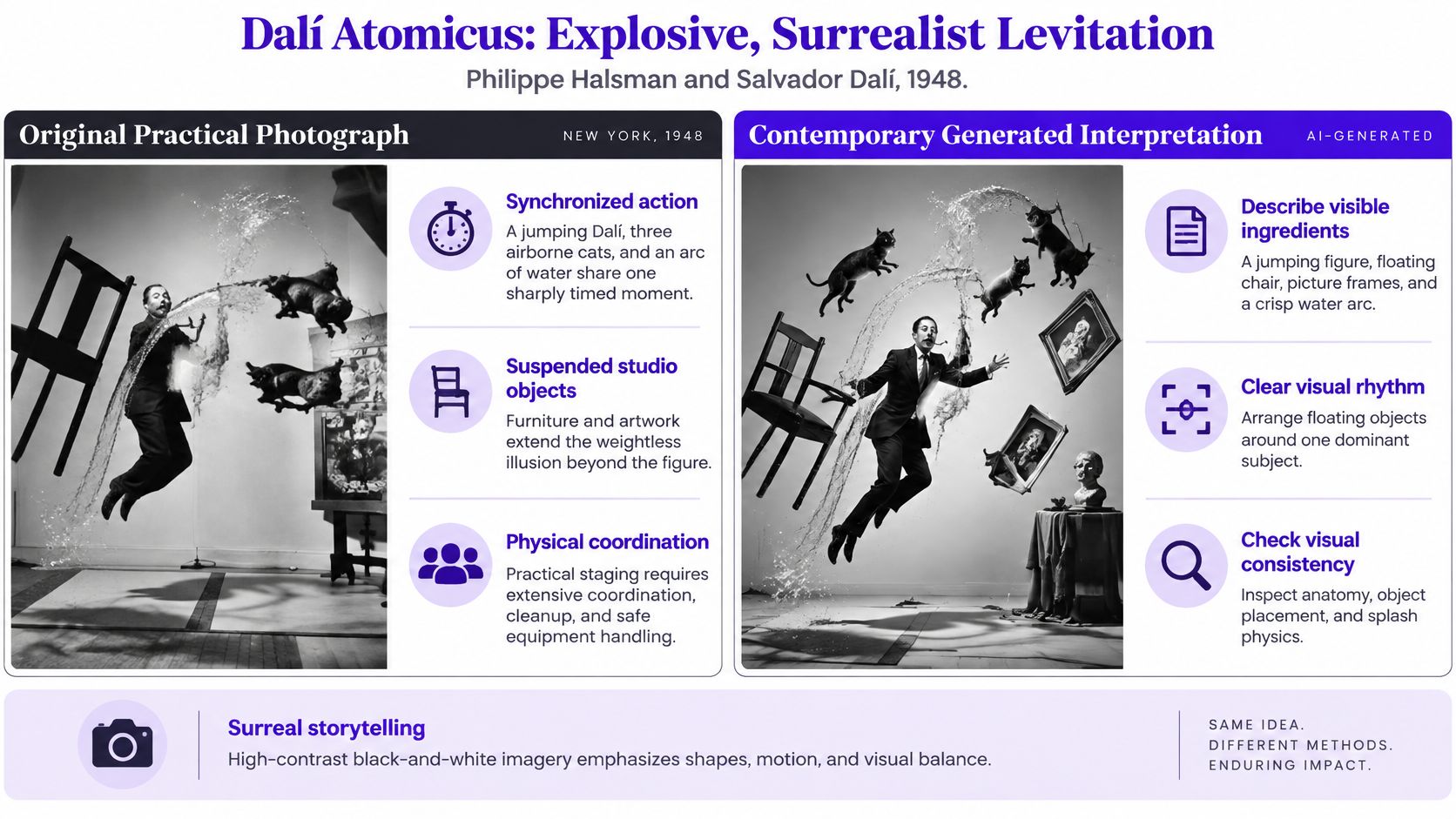
For a contemporary interpretation, leave live animals out of the action. Use lightweight props, separately photographed elements, or generated imagery, and keep thrown water away from people and electrical equipment.
Practical rule: Describe the visible ingredients, not just “surreal levitation.”
The trade-off is complexity. Every added object creates another opportunity for an AI-generated image to contain fused edges, contradictory lighting, or an unclear overlap. Establish the figure first, then add the surrounding action.
A person floating beside an ordinary sidewalk can feel stranger than someone flying through a fantasy sky. Natsumi Hayashi's self-portraits, shared through yowayowa camera woman diary, use everyday locations and relaxed-looking jump timing to make levitation seem almost routine.
The key ingredient is a body that doesn't advertise exertion. A clenched face, raised shoulders, or obvious push-off posture makes the picture read as a jump. A calm expression and loosely hanging arms suggest that gravity has stopped working.
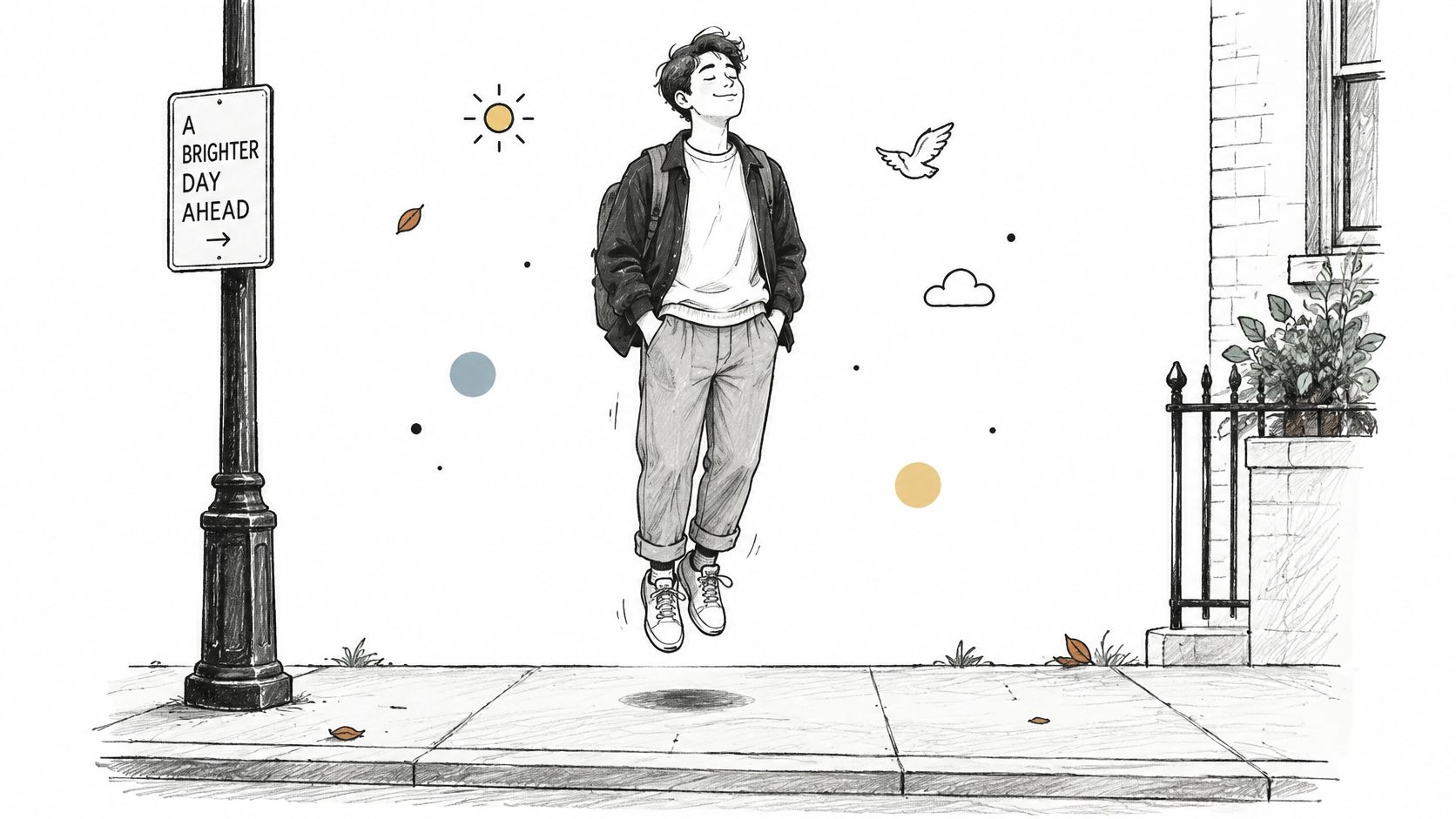
For a camera attempt in adequate light, start around 1/500 second or faster, with burst shooting and a pre-focused subject position, following this jump-based levitation photography workflow. Choose a flat, clear landing area, not a railway platform edge or active road.
starryai prompt recipe: Photographic-style full-body portrait of a backpack wearer hovering slightly above a quiet city sidewalk, relaxed face, loose shoulders, both feet visibly clear of the pavement, soft ground shadow, overcast daylight, ordinary street background, no flying gesture.
Composition callout: Include enough pavement to show the gap and shadow. Don't crop so tightly that viewers lose the ground reference.
Before-and-after variant: Turn a casual walking selfie into a hovering commute portrait while retaining the clothing, street setting, and unhurried expression. For another direction, adapt the pose through these surreal self-portrait ideas.
Keep the apparent elevation modest. The everyday setting already supplies the surprise.
Sam Taylor-Johnson's Self Deceit, created when she was known as Sam Taylor-Wood, presents the artist suspended in an austere interior. A support system was removed from the finished photographs, leaving a body that feels both sculptural and vulnerable.
Unlike cheerful floating portraits, these images retain bodily strain. The contrast between apparent freedom and physical tension gives the pose emotional weight. An empty room helps because there's little else competing for attention.
A convincing floating portrait doesn't have to look comfortable. It has to make its physical and emotional choices feel intentional.
For a safer interpretation, choose a comfortable pose on a stable, low support, rather than improvising a suspension rig. Capture the supported subject and an empty background with the camera fixed, then reveal the clean plate through a layer mask, as described in this supported levitation compositing guide.
starryai prompt recipe: Minimal interior, adult figure hovering in a sculptural curled pose, emotional stillness, restrained expression, side lighting defining the torso and limbs, muted walls, coherent cast shadow, photographic texture, no superhero gesture.
Composition callout: Leave visible floor beneath the body and space around extended limbs. Check that the shadow belongs to the apparent floating position, not to an erased stool.
Before-and-after variant: Begin with a seated portrait in a bare room. Develop it into a gently curled airborne figure while preserving the original light direction and subdued palette.
The main trade-off is exposure of detail. In a minimal scene, awkward wrists, broken anatomy, or a mismatched shadow have nowhere to hide.
In Denis Darzacq's La Chute, dancers appear to fall, drift, or hang in midair against ordinary urban architecture. The images capture real movement rather than digitally inserting floating bodies into the scene.
Their strength comes from opposition: dynamic bodies against rigid surroundings. A horizontal torso interrupts the verticals of a wall or building. The viewer recognizes the setting immediately but can't comfortably resolve the body's position within it.
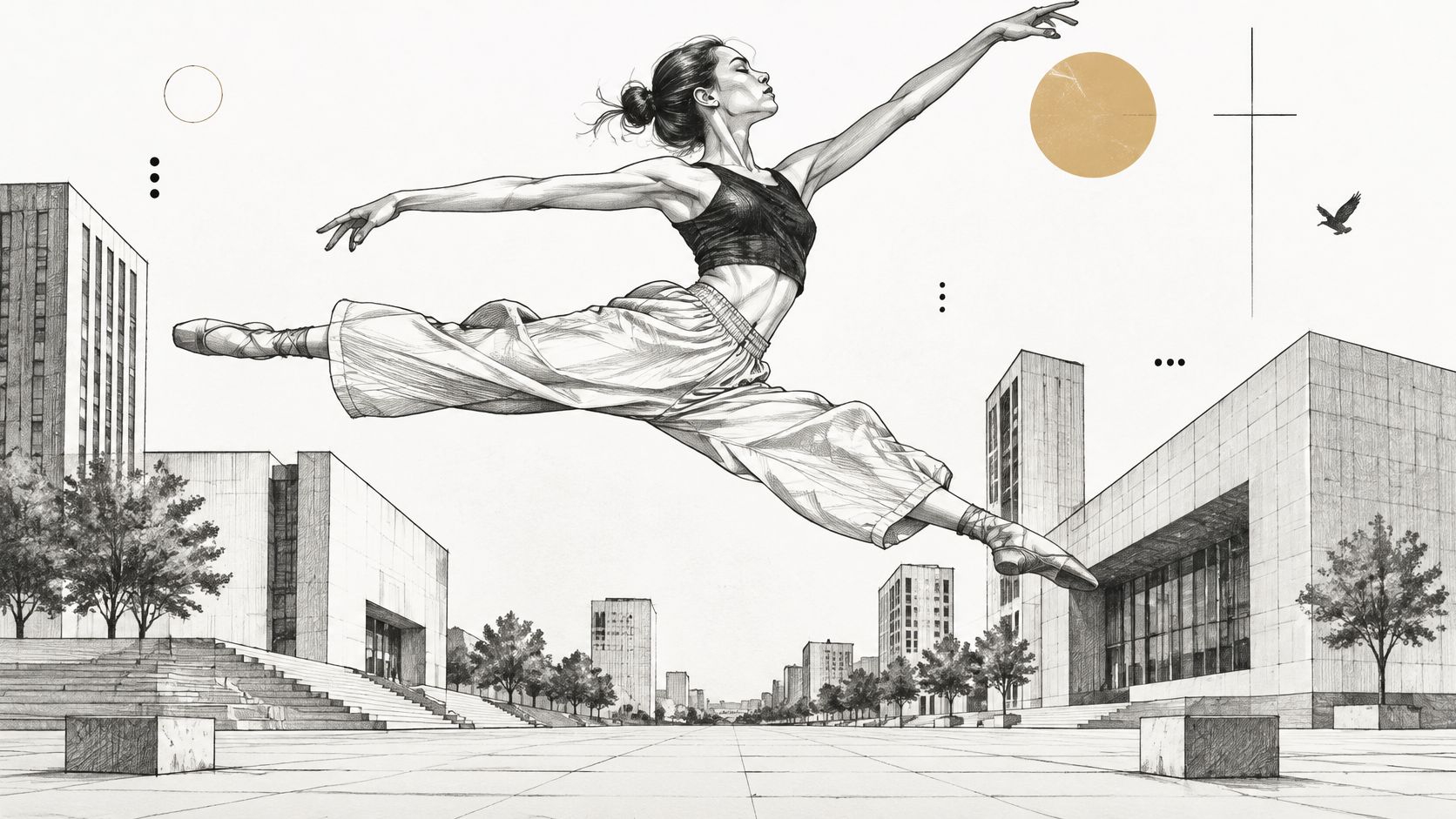
If you're photographing movement, collaborate with trained dancers and let them choose actions they can execute and land safely. Don't ask an untrained friend to reproduce a horizontal fall because the finished photograph looks effortless.
Inspect generated joints carefully. A dramatic pose can conceal an extra limb or an impossible shoulder rotation on a small screen. If the silhouette is confusing, simplify the arm position before adding more architectural detail.
Li Wei's Falls series and other staged photographic performances turn impossible bodily arrangements into public spectacle. Hovering figures and dramatic inversions disrupt familiar urban environments rather than retreating into an obviously imaginary world.
His methods vary by image and can involve wires, scaffolding, mirrors, and acrobatic coordination. That distinction matters: the finished photograph isn't a production diagram, and an apparently simple pose may depend on substantial physical assistance.
Safety boundary: Don't attempt rooftop suspensions, headfirst stunts, or wire-supported poses without a qualified professional team.
For most creators, ground-level compositing or generation is the sensible route. This safety-focused floating photography guidance distinguishes ordinary jump shots from hazardous supported and suspended setups.
starryai prompt recipe: Photographic-style urban performance scene, single adult figure hovering in an improbable sideways pose above an empty pedestrian courtyard, full body visible, clear separation from the pavement, consistent architectural perspective, believable daylight shadow, clearly constructed surreal artwork.
Composition callout: Start with a single floating figure. Establish the body's size against doors, paving, and surrounding buildings before adding spectators or extra performers.
Before-and-after variant: Replace a concept involving a person hanging from a rooftop with a generated courtyard scene containing the same diagonal body shape. Keep the visual disruption while removing the dangerous production requirement.
AI generation also needs restraint. Check neck alignment, limb lengths, and the relationship between the figure and nearby surfaces. An extreme pose won't look persuasive if the surrounding building appears to bend around it.
Choose the emotion before choosing the floating pose. Brooke Shaden's conceptual self-portrait practice and educational work on constructing photographic stories offer a useful reference for images in which levitation suggests escape, grief, or transformation.
Here, the setting isn't merely a backdrop. Clothing, atmosphere, and a meaningful prop help establish the narrative. A floating figure should express something more specific than an ability to fly.
For a practical composite, use the locked-camera clean-plate approach described earlier. Photograph a safely supported subject and the empty scene without changing the framing, focus, exposure, or white balance.
starryai prompt recipe: Photographic-style fine-art fantasy portrait, solitary adult figure hovering above a dark meadow, loosely curled posture, wind lifting the hem of a faded dress, a closed letter drifting nearby, soft directional light, restrained colors, negative space above for book-cover typography.
For an indie author's cover concept, that letter could suggest separation or an unanswered message. Add the final title separately in a design tool rather than relying on generated lettering.
Maia Flore's Sleep Elevations places apparently sleeping or resting figures in improbable airborne situations. Photographic settings and constructed scenarios make the suspension feel quiet and dreamlike rather than athletic.
The strongest ingredient to borrow is the relationship between a small figure and an expansive environment. A relaxed silhouette surrounded by open space suggests a dream without requiring a crowded fantasy setting. The body appears to rest according to a different set of rules.
starryai prompt recipe: Wide photographic-style scene, small adult figure resting horizontally above a meadow, relaxed hands and bent knees, modest visible gap above the grass, fabric hanging softly downward, morning light from the left, subtle shadow consistent with that light, expansive open sky, quiet dream atmosphere.
Composition callout: Keep enough detail to recognize the resting posture, but don't enlarge the figure until it overwhelms the surroundings. Preserve the empty space that makes the suspension feel unhurried.
Before-and-after variant: Begin with a resting figure on a blanket in a meadow. Rework the scene so the person hovers above the grass while the surroundings remain calm and familiar.
Explore alternative moods through the land of dreams and nightmares challenge roundup, but keep the visual mechanics explicit. Specify body position, fabric behavior, apparent height, and light direction rather than relying on “dreamlike” alone.
Present the result as a generated image or photographic-style artwork, not evidence of an actual airborne event. The illusion can remain compelling without misleading viewers about how you made it.
| Item | Core Technique | Best For | Main Risk |
|---|---|---|---|
| Dalí Atomicus: Explosive, Surrealist Levitation | Synchronized practical staging with suspended objects and frozen action | High-energy surreal imagery and editorial campaigns | Complex staging, cleanup, and inconsistent generated physics |
| Natsumi Hayashi's Everyday Levitation Self-Portraits | Timed jump captured with a relaxed pose in an ordinary setting | Self-portraits and short-form social content | Repeated attempts; visible jump cues can weaken the illusion |
| Sam Taylor-Johnson's Self Deceit: Minimalist Suspended Portraiture | Supported poses with support removed in post-production | Emotionally charged fine-art portraits | Unsafe rigging or difficult support retouching |
| Denis Darzacq's La Chute: Bodies Suspended in Urban Space | Fast-shutter photography of trained dancers in midair | Dance, streetwear, and motion-focused visuals | Injury risk without skilled performers and safe execution |
| Li Wei's Gravity-Defying Performance Photographs | Staged performance using practical assistance and dramatic perspective | Attention-grabbing conceptual and editorial imagery | Hazardous setups and distorted anatomy or perspective |
| Brooke Shaden's Fine-Art Fantasy Levitation | Compositing and constructed scenes for symbolic storytelling | Fantasy concepts and emotionally driven imagery | Inconsistent composite lighting or visual clutter |
| Maia Flore's Sleep Elevations: Dreamlike Floating Figures | Quiet, resting poses staged in expansive surreal settings | Dreamlike portraits and imaginative print concepts | Unconvincing scale or generic visual storytelling |
The shared ingredients behind these pictures of levitation are straightforward: a dominant subject, readable posture, believable shadows, controlled timing, and safe production choices. Their emotional effects differ because the artists organize those ingredients differently. Explosive studio action needs visual rhythm, while a quiet outdoor scene needs room around the body.
Choose the production method that gives you control without unnecessary risk. Jump photography works when a subject can move and land comfortably. Supported compositing offers more control over posture but demands careful masking and lighting continuity, while generation avoids staging the physical stunt but requires close inspection of anatomy and spatial relationships.
Start with a single figure and a simple environment. Evaluate the result against a short composition check before expanding the scene:
If the result feels fake, don't immediately request more realism or greater detail. Identify the visible failure and revise that part of the prompt: soften a rigid hand, separate a shoe from the background, or correct the shadow direction. The same habit helps when you write clearer prompts for 3D generation: describe concrete spatial relationships instead of stacking vague adjectives.
Only add floating props, elaborate scenery, or extra figures after the basic illusion works. Keep a record of your prompts and edits, and label generated work transparently when you publish it. Your next useful step is a focused test, not a more complicated scene: pick a reference, create a single-figure prompt, and fix the weakest relationship in the first output.
starryai offers text-to-image generation and image inputs for creating your own levitation concepts without staging a physical stunt. Visit starryai, try a prompt recipe above, and check the pose, shadow, and ground relationship before adding more complexity.


