

Écrit parMo Kahnle


Plus de8 000 s dans l'art occidentalont été étudiés, et les idées de surréalistes les plus fortes suivent toujours une règle simple : combiner une transformation claire, une ambiance contrôlée et une palette de couleurs ciblée. Avec un selfie reconnaissable et une invite concise, starryai vous permet de tester ces combinaisons rapidement au lieu de construire chaque effet à la main.
Le surréalisme en surréaliste ne se résume pas à l'ajout d'un filtre inhabituel. Le visage doit rester identifiable, tandis qu'un changement visuel dominant donne son sens à l'image. Une galaxie peut suggérer une échelle spirituelle, le tissu peut évoquer l'artisanat et la mémoire, et un visage fracturé peut évoquer des identités parallèles.
Cette approche a des racines profondes. LeManifeste surréaliste de 1924d'André Breton définissait le surréalisme comme « l'automatisme psychique à l'état pur », et des artistes tels que Frida Kahlo, Salvador Dalí, Leonora Carrington et Remedios Varo ont traité le surréaliste comme un lieu de métamorphose et de narration psychologique. Dès les années 1930 et 1940, la photographie et la peinture de surréalistes surréalistes étaient devenues un mode artistique reconnaissable, et non une expérience isolée.Cette histoire des s surréalistesaide à expliquer pourquoi les transformations de l'IA d'aujourd'hui se sentent connectées à un langage artistique plus ancien.
Les dix idées ci-dessous comparent l'impact créatif, la clarté du visage, la complexité visuelle et l'utilité pratique. Chacune comprend une direction d'ambiance, une logique de palette, une configuration de selfie, des tactiques d'invite et un scénario réaliste pour l'utilisation de l'image finie. Pour une référence plus large en matière de surréaliste, explorez lacollection Masters Remastered.
Un surréaliste céleste fonctionne parce qu'il transforme le visage en une partie d'un monde visuel plus vaste. Au lieu de placer une personne devant des étoiles, mélangez la peau, les cheveux ou les yeux avec des nébuleuses pour que le sujet semble contenir l'univers. La transformation semble expansive, mystique et immédiatement lisible lorsque les yeux et le contour du visage restent clairs.
Utilisez un selfie bien éclairé, de face, avec des traits de visage visibles et une expression calme. Un fond sombre donne aux étoiles de la place pour briller, tandis que le violet, le bleu et le rose créent une douce palette cosmique. Gardez une couleur dominante, puis utilisez les autres comme accents dans la nébuleuse et la lumière réfléchie.
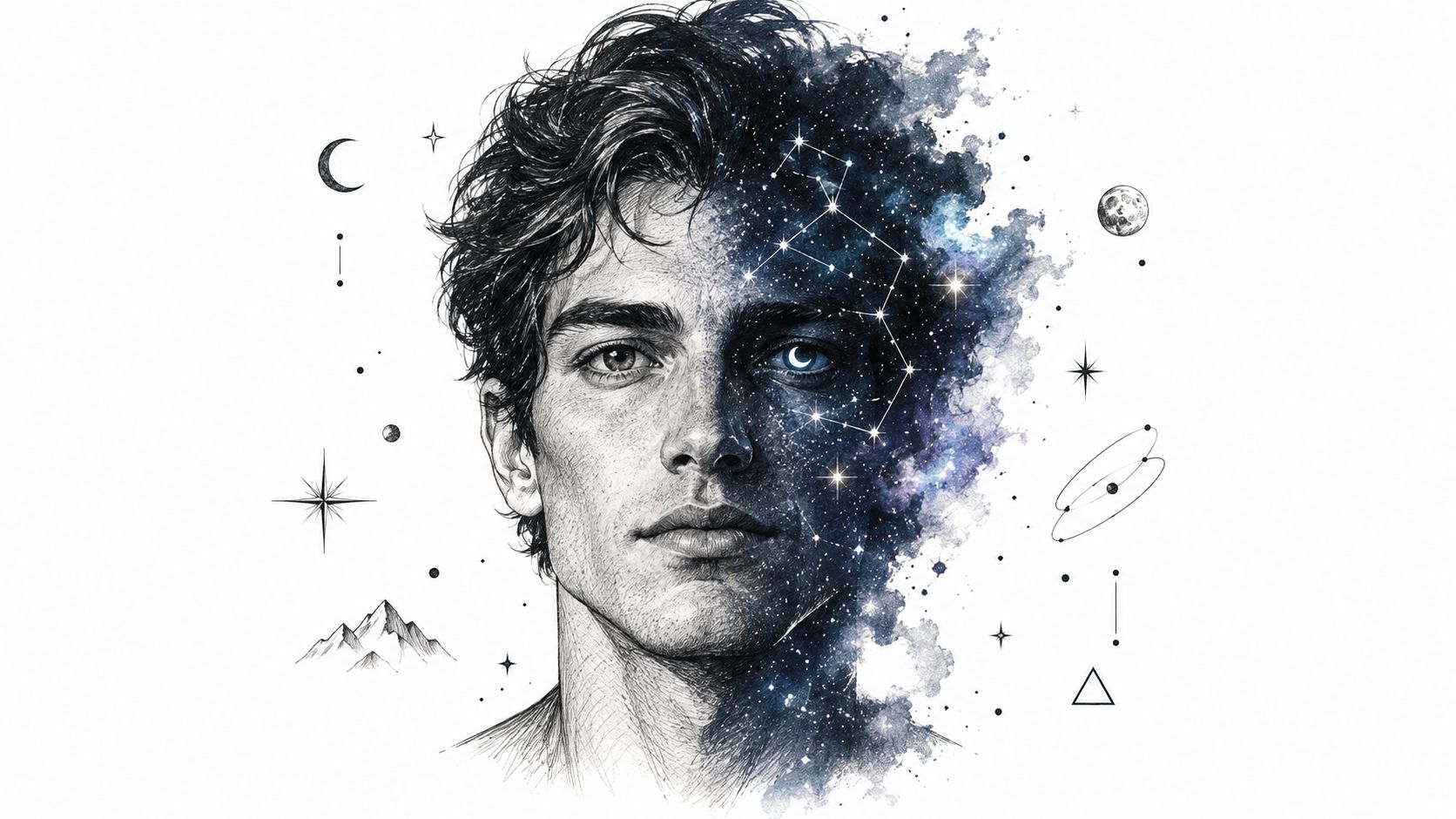
Commencez par le sujet et la transformation, puis définissez l'ambiance et la composition. Une structure d'invite utile est : « surréaliste reconnaissable, visage se fondants dans une nébuleuse violette, étoiles traversant les cheveux, ambiance mystique calme, composition centrée, lumière de contour douce, yeux détaillés ». Évitez d'ajouter plusieurs effets non liés. La galaxie est déjà l'idée principale.
Ce concept convient aux vidéos de transformation TikTok, au développement de personnages de romance paranormale, aux avatars de RPG fantastiques et au contenu de bien-être qui présente le créateur comme un guide réflexif ou spirituel. Associer le résultat à de la musique mystique peut renforcer une courte vidéo, tandis qu'un recadrage carré fonctionne bien pour un profil de jeu.
Pour plus de contrôle sur un résultat basé sur un selfie, utilisez legénérateur d'images de selfie AI starryaiet décrivez exactement où le matériau cosmique doit apparaître. Vous pouvez également explorer des marchandises visuelles au clair de lune à travers leMarché Loyaltie de décorations faites à la main.
Règle pratique :Protégez d'abord les yeux. Si les étoiles prennent le dessus, réduisez l'effet cosmique avant de modifier la palette.
Les portraits fracturés créent de l'impact par la répétition et la séparation. Un visage devient plusieurs plans, expressions ou versions parallèles, de sorte que le spectateur lit l'image comme un puzzle visuel plutôt que comme un portrait standard. L'idée fonctionne mieux lorsque la géométrie a une structure claire, telle qu'une division diagonale, un masque à facettes ou un petit ensemble de panneaux répétitifs.
Prenez un selfie avec une expression audacieuse et des vêtements relativement simples. Un regard direct, un sourcil levé ou une expression la bouche ouverte donnent à chaque fragment un signal émotionnel fort. Commencez par deux ou trois grands plans géométriques avant d'essayer un arrangement kaléidoscopique dense.
Choisissez des couleurs complémentaires pour rendre les divisions évidentes. Par exemple, un visage orange chaud sur des plans de bleu profond crée une tension, tandis que le violet et le jaune produisent un résultat plus électrique. Gardez l'arrière-plan discret pour que la structure fracturée ne disparaisse pas dans le bruit visuel.
Un prompt doit spécifier à la fois la mise en page et le contraste émotionnel : « autoportrait reconnaissable divisé en plans géométriques, trois réalités parallèles, une expression calme et une expression intense, collage angulaire, palette complémentaire orange et bleu, éclairage de studio net ». Des mots tels que « séparation nette », « plans à facettes » et « symétrie contrôlée » aident à éviter un résultat indistinct.
L'image finie peut devenir une pochette d'album pour un musicien indépendant, un portrait de personnage de JDR sur table ou un graphique pour la musique psychédélique et électronique. Elle s'adapte également bien aux chemises et aux sweat-shirts à capuche, car les formes audacieuses restent lisibles après le recadrage.
Un motif géométrique simple est plus utile qu'un prompt surchargé. Une fois que la structure fonctionne, ajoutez une deuxième dimension, des caractéristiques en miroir ou un arrière-plan plus complexe.
La fusion avec la nature donne à un portrait surréaliste un aspect organique plutôt que mécanique. Des fleurs, de l'écorce, de l'eau, des feuilles ou de la faune peuvent pousser à partir de la ligne des cheveux, suivre les pommettes ou remplacer des parties de l'arrière-plan. La logique visuelle est plus forte lorsque l'élément naturel se connecte aux couleurs existantes du sujet au lieu de paraître comme une décoration aléatoire.
Un selfie en extérieur vous offre un point de départ utile pour l'harmonie des couleurs. Associez les fleurs aux vêtements, utilisez des feuilles qui font écho à la couleur des cheveux ou choisissez des tons d'eau qui soutiennent les yeux. Une expression douce et une lumière du jour délicate conviennent à un résultat atmosphérique, tandis qu'un regard direct peut rendre le portrait plus déterminé et militant.
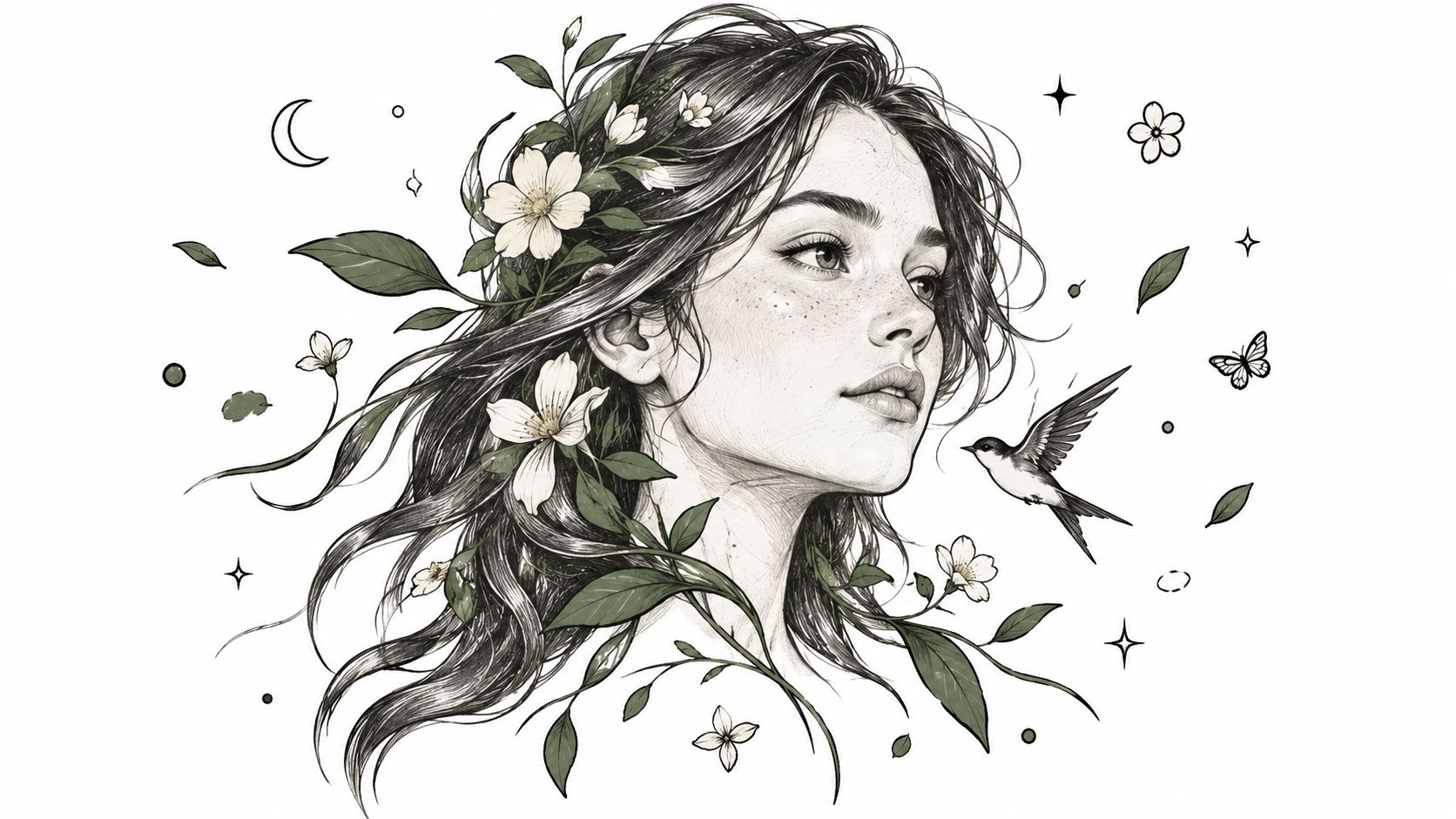
Utilisez un prompt qui explique la relation entre la personne et la nature : « autoportrait reconnaissable fusionnant avec des feuilles de fougère et des fleurs sauvages, petit oiseau près de l'épaule, transition organique à travers les cheveux, ambiance de bois paisible, palette vert pastel et ambre, lumière douce naturelle ». Précisez si les plantes doivent encadrer le visage, en couvrir un côté ou s'étendre dans l'arrière-plan.
Ce concept offre aux créateurs environnementaux, aux éco-influenceurs et aux marques de bien-être un langage visuel pour la beauté naturelle. Un auteur fantastique pourrait l'utiliser comme art de personnage initial, tandis qu'un vendeur Etsy pourrait développer des collections d'imprimés saisonniers autour des feuilles d'automne ou des fleurs de printemps.
Laissez l'élément naturel modifier la structure du portrait, et pas seulement décorer ses bords.
Le glitch art transforme l'identité en informations numériques instables.Le déplacement de pixels, les canaux de couleur brisés, les lignes de balayage et les tranches nettes donnent l'impression que le portrait est transmis, corrompu ou reconstruit. L'effet fonctionne parce qu'un dommage contrôlé crée une tension tandis qu'un visage reconnaissable maintient l'image personnelle.
Commencez par un selfie clair, des vêtements modernes et un fort contraste. Une chemise sombre, un tissu réfléchissant ou une silhouette définie donnent aux artefacts une forme nette à interrompre. La ségrégation du rouge et du cyan semble immédiate et énergique. Le vert, le noir et le bleu électrique créent une ambiance cyberpunk plus froide.
Utilisez d'abord un réglage modéré : « autoportrait cyberpunk reconnaissable, distorsion de glitch modérée, aberration chromatique autour des cheveux et des épaules, pixels déplacés, fond de ville sombre, reflets cyan et magenta, éclairage futuriste net ». Gardez les yeux, le nez et la bouche intacts, puis placez la distorsion autour des cheveux, des épaules ou de l'arrière-plan. Si starryai fragmente trop le visage, remplacez « heavy glitch » par « localized glitch accents ».
Un diffuseur de jeux en streaming peut adapter le portrait pour un avatar de chaîne ou une superposition de flux. Les musiciens électroniques peuvent l'utiliser pour des illustrations synthwave, et un fondateur de technologie peut choisir une version sobre pour une image de profil. Il convient également à une série TikTok sur l'identité numérique, où chaque variation représente un niveau différent d'interférence numérique.
Pour les variations de prompt et un libellé plus précis, utilisezles prompts du générateur d'images IA starryai. Modifiez une instruction à la fois, telle que des lignes de balayage plus fortes ou un arrière-plan plus lumineux, afin de pouvoir identifier quel détail du prompt modifie le résultat.
La transformation liquide fonctionne par la perte de frontières solides. Le visage semble se dissoudre dans l'aquarelle, l'encre, la peinture, la fumée ou l'eau courante, créant une ambiance qui semble émotionnelle et éphémère. Contrairement au glitch art, qui brise le portrait en fragments numériques durs, les effets liquides créent des transitions douces qui peuvent préserver un sentiment d'intimité.
Utilisez un éclairage à fort contraste dans le selfie afin que le visage ait une base tonale claire. Une pose aux trois quarts peut donner l'impression que le liquide s'écoule dans une direction, tandis qu'un portrait de face crée un effet de fusion symétrique. Les bleus froids suggèrent le calme ou la distance, et les rouges chauds suggèrent la passion ou l'urgence.
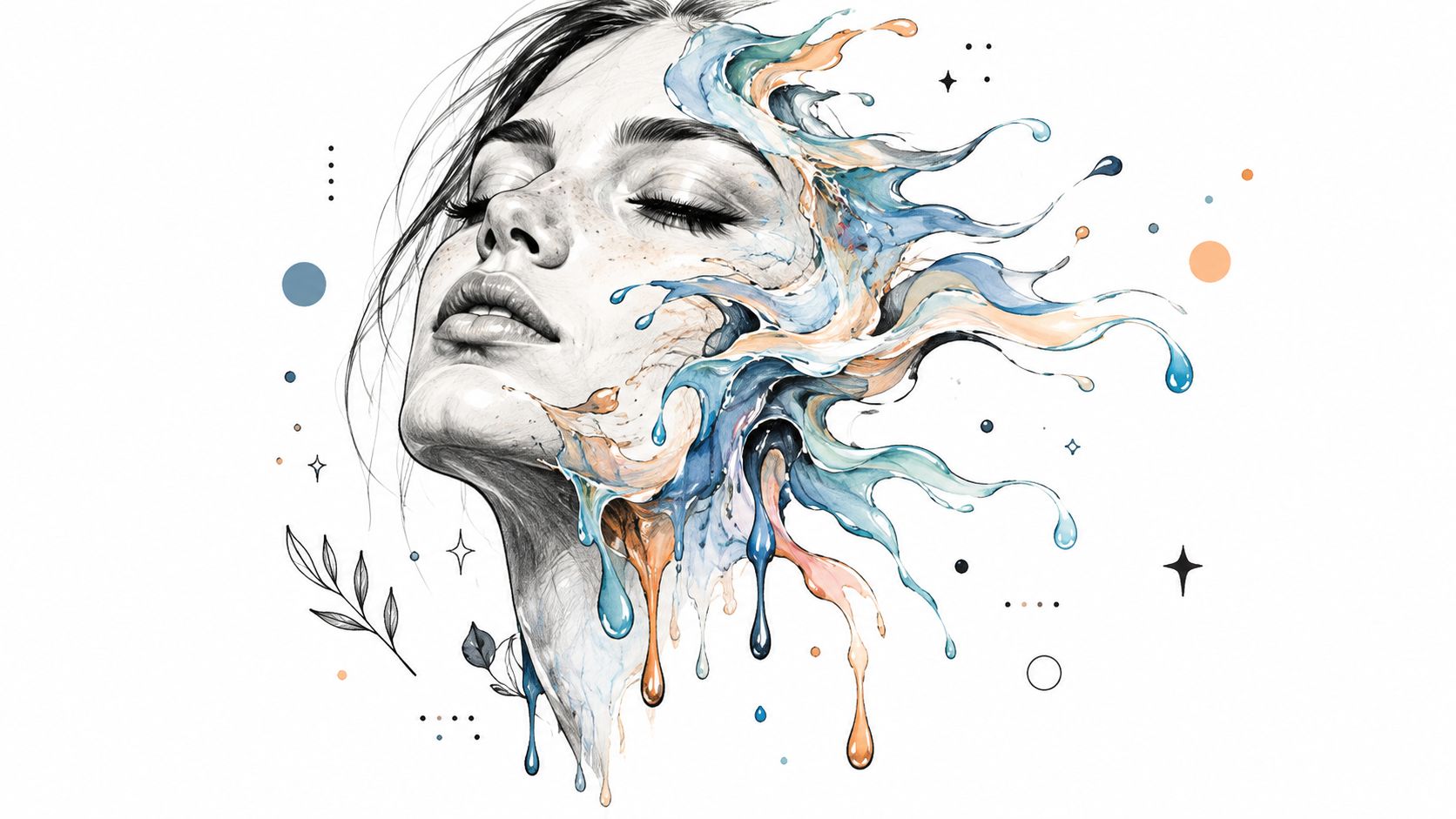
Décrivez le matériau, la direction et le ton émotionnel dans cet ordre : « autoportrait reconnaissable se dissoudant dans une aquarelle bleue fluide, bords liquides se déplaçant de la joue vers l'arrière-plan, ambiance calme et réflexive, éclairage de portrait à fort contraste, texture de papier, palette limitée de bleu et d'argent ». Si vous voulez de l'encre, dites « the black wet ink blooms » (l'encre noire humide s'épanouit). Si vous voulez de la peinture, nommez la finition, comme la gouache translucide ou l'acrylique épaisse.
Les auteurs de romans fantastiques et paranormaux peuvent utiliser ce style pour des concepts de personnages atmosphériques ou l'exploration de couvertures. Les beaux-artistes peuvent créer des études de portfolio et les marques de bien-être peuvent utiliser des portraits liquides doux à côté de légendes poétiques.
Un seul matériau a généralement l'air plus intentionnel qu'un mélange d'eau, de fumée, de peinture et de verre. Choisissez la substance qui correspond le mieux à l'histoire que vous voulez que le visage raconte.
Les portraits kaléidoscopiques transforment l'identité personnelle en motif. Des sections en miroir du visage deviennent un design semblable à un mandala, permettant à l'image de fonctionner à la fois comme un portrait et comme une œuvre d'art abstraite. La symétrie crée le calme et l'ordre, tandis que l'asymétrie contrôlée introduit le mouvement et la tension émotionnelle.
Utilisez un selfie centré et orienté vers l'avant avec un éclairage uniforme. Gardez l'arrière-plan simple et évitez les bijoux ou les vêtements chargés, car les détails répétés peuvent rapidement rivaliser avec le visage. Une palette d'indigo, d'or et de crème donne au design un air cérémoniel, tandis que le corail, la turquoise et le violet se sentent plus festifs.
Un prompt peut établir le motif avant d'ajouter la décoration : « autoportrait reconnaissable centré transformé en kaléidoscope symétrique, sections faciales en miroir formant un mandala, géométrie radiale précise, palette indigo et or, fond sombre et propre, détaillé mais équilibré ». Vous pouvez ensuite demander une version asymétrique si le premier résultat semble trop statique.
Les applications de yoga et de méditation peuvent utiliser l'image pour des illustrations de campagne, et les vendeurs Etsy peuvent l'adapter en marchandises spirituelles. Les organisateurs de festivals et les musiciens peuvent également utiliser le portrait comme motif d'affiche. Des variations concordantes peuvent créer une collection cohérente sans exiger que chaque image ait la même composition.
Les versions les plus fortes maintiennent une caractéristique reconnaissable, telle que les yeux ou la bouche, au centre. Cette ancre garde le motif personnel au lieu de le transformer en un ornement générique.
Un portrait de double entité raconte une histoire par le contraste. Un côté peut être réaliste et l'autre mythique, ou une version peut paraître joyeuse tandis que l'autre a l'air sur ses gardes. Le spectateur comprend rapidement le concept car la composition donne à deux identités un visage partagé et une frontière visible.
Prenez un selfie avec un éclairage équilibré et une pose neutre ou expressive. Décidez ce que signifie le contraste avant d'écrire le prompt. « Lumière et ombre » est large, mais « confiance publique et vulnérabilité privée » donne à l'image une direction émotionnelle plus claire.
La composition en écran partagé est utile car elle sépare les deux états sans perdre la connexion entre eux. Utilisez des ambiances complémentaires et des couleurs apparentées, telles que l'or chaud d'un côté et le bleu froid de l'autre. Une zone de transition étroite peut suggérer que les identités changent plutôt que d'être définitivement divisées.
Essayez : « autoportrait reconnaissable divisé verticalement en deux entités, l'une réaliste et calme, l'autre mythique et éclairée par la tempête, yeux partagés, séparation claire, palette or et indigo, éclairage latéral dramatique, style éditorial psychologique ». Gardez le visage aligné sur les deux moitiés afin que le spectateur puisse les comparer.
Cette approche convient aux couvertures de thrillers et de fictions psychologiques, à l'image de marque musicale axée sur l'identité et aux campagnes de sensibilisation à la santé mentale qui ont besoin d'une métaphore visuelle plutôt que d'une illustration littérale. Les créateurs de TikTok peuvent également l'utiliser pour des vidéos de transformation, avec des légendes qui expliquent ce que représente chaque côté.
Test de composition :Couvrez une moitié de l'image. Si la moitié restante a toujours une ambiance claire, votre contraste fait un travail narratif utile.
Les portraits bioluminescents donnent l'impression que le sujet émet de la lumière de l'intérieur. Des bords néon, une peau phosphorescente et des traînées de lumière flottantes peuvent transformer un visage familier en une présence surnaturelle ou futuriste. L'effet dépend du contraste, de sorte qu'un fond sombre est plus important que l'ajout d'une lueur supplémentaire.
Choisissez un selfie avec une silhouette claire et des vêtements qui soutiennent le concept. Une veste noire, une bordure réfléchissante ou un accessoire futuriste peuvent aider la lumière générée à se sentir attachée au corps. Le cyan, le violet et le vert acide suggèrent un cadre cyberpunk, tandis que l'ambre et la rose créent une atmosphère magique plus chaleureuse.
Un prompt doit définir la source lumineuse : « autoportrait reconnaissable émettant de la lumière cyan des yeux et de la clavicule, peau phosphorescente subtile, de fines traînées de lumière autour des épaules, fond futuriste sombre, palette néon sobre, éclairage de jante cinématique ». « Subtil » et « localisé » peuvent empêcher la lueur de couvrir les traits du visage.
Les diffuseurs de jeux en streaming et les joueurs d'esports peuvent utiliser une version à fort contraste pour l'image de marque de la chaîne. Les musiciens électroniques et synthpop peuvent développer des pochette d'album à partir du même langage visuel, tandis qu'une marque technologique peut préférer un portrait sobre avec un accent lumineux. Le concept s'adapte également aux publications sociales nocturnes, où le décor sombre soutient l'illusion de la lumière interne.
Ne demandez pas toutes les couleurs néon à la fois. Choisissez une lueur principale et un accent secondaire, puis ajustez l'arrière-plan avant d'amplifier l'effet.
La transformation mythologique fonctionne parce qu'elle confère au portrait une histoire héritée. Cornes, ailes, couronnes, masques et auréoles ne sont pas de simples ajouts décoratifs lorsqu'ils identifient un rôle, tel qu'une divinité, un gardien, un farceur ou un guide des enfers. Le visage reste reconnaissable tandis que les symboles environnants modifient son statut.
Commencez par une orientation mythologique spécifique plutôt que par une demande vague de personnage fantastique. Étudiez le langage visuel de la tradition à laquelle vous souhaitez faire référence, puis choisissez des symboles et des couleurs qui la soutiennent. Un éclairage dramatique dans le selfie aide les ailes, les cornes ou les détails métalliques générés à sembler connectés au visage.
Utilisez une invite telle que : « autoportrait reconnaissable en gardien de la lune, couronne d'argent, ailes subtilement emplumées, aura de croissant lumineuse, expression sérieuse, palette de bleu marine profond et d'argent, éclairage latéral dramatique, art de personnage fantastique détaillé. » Remplacez le rôle et les symboles par un concept qui correspond à votre histoire. La création d'un monde spécifique donne à l'image plus de cohérence qu'une longue liste d'objets fantastiques.
Les auteurs de romance fantastique peuvent utiliser le résultat pour le développement de personnages et l'exploration de couvertures. Les joueurs de jeux de rôle sur table peuvent visualiser des personnages personnalisés, tandis que les développeurs de jeux indépendants et les créateurs de bandes dessinées peuvent constituer une liste cohérente de portraits.
Gardez les symboles culturels spécifiques et respectueux. Si le portrait fait référence à une tradition vivante, évitez de traiter l'imagerie sacrée comme un costume aléatoire. La métamorphose la plus forte commence par un rôle de personnage, puis sélectionne les détails visuels qui le communiquent.
Les portraits textiles remplacent la douceur numérique par des preuves matérielles. Le visage peut apparaître tissé, brodé, tricoté, matelassé ou assemblé à partir de tissu, ce qui donne à l'image un aspect tactile et fait main. Cette transformation est particulièrement efficace lorsque le motif suit les contours du visage plutôt que de reposer comme une texture plane sur la peau.
Utilisez un selfie bien focalisé avec des contours visibles et un arrière-plan simple. La rouille chaude, l'ocre, la crème et le rouge sourd créent une esthétique artisanale accessible, tandis que le noir, le blanc et une seule couleur d'accentuation peuvent sembler plus éditoriaux. Associez le textile à l'identité visée, comme le patchwork pour la mémoire, la broderie pour le détail ou le tissage brut pour une marque rustique.
Une invite pourrait être : « autoportrait reconnaissable construit à partir de tissu brodé et de fil visible, contours du visage préservés, motif floral cousu main, palette ocre chaud et crème, lumière douce de studio, texture d'artisan tactile. » Si le résultat fait perdre le visage, ajoutez « yeux clairs, bouche lisible, clarté du portrait, le tissu suit la structure faciale. »
Les vendeurs Etsy peuvent utiliser le concept pour des produits faits main, tandis que les artistes du textile peuvent associer le portrait généré à des vidéos des coulisses de fabrication. Les marques de mode durable peuvent développer une image de profil axée sur les matériaux, et les créateurs d'artisanat peuvent l'utiliser pour les vignettes TikTok ou YouTube.
Utilisezstarryai image-to-prompt guidancepour étudier quels détails visuels comptent dans une référence textile, puis traduisez ces détails en une invite de selfie. Le but n'est pas d'ajouter « tissu » comme adjectif final. Il s'agit de spécifier le tissage, le motif, l'éclairage et la structure faciale préservée.
| Style | 🔄 Complexité de mise en œuvre | ⚡ Efficacité des ressources et du temps | 📊 Résultat / Impact attendu | 💡 Cas d'utilisation idéaux | ⭐ Avantages clés |
|---|---|---|---|---|---|
| Soi Miroir Céleste | Moyen, cartographie faciale + fusion de textures spatiales | Moyen, nécessite un selfie bien éclairé et des ajustements de couleur | Fort impact visuel ; mystique, partageable ; peut perdre les détails fins | Réseaux sociaux, image de marque spirituelle/bien-être, avatars fantastiques | Évoque une esthétique cosmique ; hautement partageable |
| Soi Dimensionnel Fracturé | Élevé, réplication géométrique et travail d'illusion 3D | Faible à Moyen, réglages itératifs de couleur et de mise en page requis | Audacieux, original, propice à la conversation ; peut être visuellement chaotique | Pochettes d'album, image de marque de jeux/fantasy, art psychédélique | Look complexe et à fort effort ; originalité remarquable |
| Soi Fusion Nature | Moyen, intégration transparente de la flore et de la faune avec le portrait | Moyen, selfies en extérieur préférés ; harmonie des couleurs nécessaire | Visuellement agréable et éco-résonnant ; les éléments naturels peuvent obscurcir les traits | Campagnes environnementales, couvertures de livres, impressions Etsy | Organique, polyvalent, idéal pour Instagram |
| Soi Art Glitch | Faible à Moyen, contrôles de distorsion et décalages de canaux | Élevé, rapide à produire ; compétence d'édition minime requise | Tendance, audacieux, hautement partageable ; risque de paraître surutilisé | Chaînes tech/jeux, musique synthwave, reels courts | Rapide à créer ; esthétique moderne adaptée aux algorithmes |
| Soi Liquide Éthéré | Moyen, rendu des fluides et transitions douces | Moyen, bénéficie d'une photo originale à fort contraste | Digne d'une galerie, poétique et émotif ; moins adapté à un usage professionnel | Couvertures de livres, portfolios d'artistes, bien-être/contenu d'ambiance | Élégant, émotif, perçu comme haut de gamme |
| Identité Kaléidoscope | Moyen-Haut, configuration de symétrie et motifs | Moyen, les selfies centrés fonctionnent le mieux ; problèmes d'échelle | Méditatif, motifs hypnotiques ; peut devenir répétitif | Applications de méditation, œuvres d'art de festival, impressions de produits dérivés | Designs personnalisés de type mandala ; fort potentiel de produits dérivés |
| Double Entité | Élevé, composition divisée et fusion par transition fluide | Bas-Moyen, concept lourd ; nécessite une direction claire | Fortement conceptuel et narratif ; peut prêter à confusion sans contexte | Couvertures de thrillers, campagnes de santé mentale, publications narratives | Imagerie profondément narrative et émotionnellement résonnante |
| Soi Bioluminescent | Bas-Moyen, effets de lueur et étalonnage des couleurs | Élevé, résultats rapides, fonctionne bien dans les photos en faible luminosité | Impact saisissant et futuriste ; une lueur excessive peut masquer le visage | Chaînes de jeux vidéo, artistes synthpop/électroniques, contenu nocturne | Fort impact visuel ; aspect premium et moderne |
| Métamorphose Mythologique | Élevé, intégration d'éléments détaillés et choix culturels | Bas, recherche et direction spécifique souvent requises | Art de personnage fantastique puissant ; risque d'encombrement ou de résultats génériques | Couvertures de livres fantastiques, art de personnages RPG, conception de concepts | Œuvres d'art de personnages de qualité professionnelle ; fort attrait narratif |
| Soi Textile et Motif | Moyen, rendu du tissu/textile et cartographie des motifs | Moyen, sélection minutieuse de la palette et des motifs nécessaire | Esthétique chaleureuse et tactile ; les motifs complexes peuvent masquer les détails | Listes Etsy/produits, promotions d'artistes textiles, campagnes saisonnières | Ambiance artisanale accessible ; excellent pour les communautés de créateurs |
Le meilleur concept dépend de ce que vous voulez que le portrait communique.Les transformations célestes, naturelles et liquidescréent des images plus douces et atmosphériques. Elles conviennent aux identités introspectives, aux décors fantastiques, au contenu de bien-être et aux récits visuels qui nécessitent de l'espace autour du visage.
La fusion céleste suggère l'émerveillement et la grandeur. La fusion avec la nature suggère l'appartenance, le renouveau ou la connexion environnementale. La transformation liquide suggère l'émotion, la mémoire et le changement. Ces idées bénéficient généralement d'une lumière douce, de transitions progressives et d'une palette limitée avec une seule couleur dominante.
Pour une intensité numérique, choisissez desdesigns glitch, bioluminescents ou fracturés. L'art glitch semble lié à des données corrompues et à l'identité en ligne. La bioluminescence crée une source d'énergie surnaturelle, tandis que la géométrie fracturée amène le spectateur à se demander s'il voit une seule personne ou plusieurs versions à la fois. Des arrière-plans sombres, un contraste plus net et des couleurs complémentaires aident ces trois concepts à rester lisibles.
Les idées restantes créent une identité narrative ou matérielle plus forte.Les portraits en double entitétransforment le contraste en histoire.La métamorphose mythologiqueattribue au sujet un rôle au sein d'un monde plus vaste.L'identité kaléidoscopiqueconvertit le visage en motif, etla transformation textilefait du médium lui-même une partie du sens.
Un flux de travail fiable permet de garder le processus ciblé :
Ce dernier point est important car le travail surréaliste peut rapidement devenir visuellement chargé. Un portrait doté d'une seule transformation forte en dit souvent plus qu'une image contenant tous les effets en même temps. L'autoportrait historique renforce l'intérêt de revenir au même visage en tant que matériau créatif. Frida Kahlo a réalisé55 autoportraits sur un total de 143 œuvres, tandis que Rembrandt a produit près de100 autoportraitset Vincent van Gogh plus de35, des chiffres documentés danscet aperçu de l'histoire de l'art. La répétition n'est pas un manque d'idées. Elle vous permet de tester la façon dont une identité unique change sous différents systèmes visuels.
Avant de publier ou d'imprimer, vérifiez quatre éléments :
Choisissez une idée, écrivez un prompt ciblé et faites de la première génération une étude plutôt qu'un jugement définitif. Le résultat le plus utile peut révéler que le visage a besoin de plus d'espace, que la lueur a besoin de moins d'intensité, ou que le matériau a besoin d'une texture plus claire. Affinez cette unique faiblesse, puis construisez la variation suivante à partir de ce qui fonctionne déjà.
starryai transforme des selfies, des prompts textuels et des émojis en visuels de haute qualité pour des expériences créatives rapides. Utilisez-le pour tester ces idées d'autoportraits surréalistes pour des avatars, des concepts de personnages, du contenu pour les réseaux sociaux, des couvertures et des produits dérivés, puis visitezstarryaipour créer votre première transformation.


.svg)