

Written by Mo Kahn on


The best birthday emoji images pair one recognizable celebration symbol with clear context: a cake for a personal wish, a gift for a promotion, or a piñata for a culturally specific party theme. More than 900 million emojis are sent daily without accompanying text on Facebook Messenger, and over 700 million appear in Facebook posts each day, showing how much meaning a simple visual can carry.
You're making a birthday post, invitation, or gift graphic, and you want it to feel personal rather than like another copy-paste greeting. Start with the emotional job the image needs to do: make someone feel celebrated, build excitement, suggest a surprise, or reflect a particular party tradition. Then choose the emoji that best signals that feeling, and give it a clear visual role.
A birthday post can feel generic when it relies on a symbol alone. Give each emoji an emotional job, then carry its visual cues into AI-generated images, social posts, invitations, or merchandise. A cake frames a personal wish, a balloon can carry a name, and confetti adds energy to a portrait. The trade-off is clarity: decorative detail can make a design festive, but too many competing symbols can weaken the message.
The 🎂 emoji signals a direct birthday greeting. It was approved in Unicode 6.0 in 2010 under code point U+1F382, then included in Emoji 1.0 in 2015. Platforms draw it differently, so build around the shared cues of frosting and candles rather than a specific style. For an image prompt, describe the cake's color, lighting, and placement; for an invitation or product graphic, keep it large enough to read at a glance.
The party popper communicates birthdays as well as graduations, weddings, and other celebrations, so add plain-language text when the message matters. Its burst of color suits announcements and social posts, while its busy shape may compete with small text on merchandise. Research on emoji use in brand communication found that emojis replacing words can produce worse outcomes than emojis reinforcing accompanying text, particularly when the symbol and message are a weak match or the written message is complex (research on emojis and brand communication).
Use the ideas below to give each emoji a distinct role, from warmth and anticipation to surprise and celebration. For milestone events, a party planning guide for milestone birthdays can help align the image with the occasion.
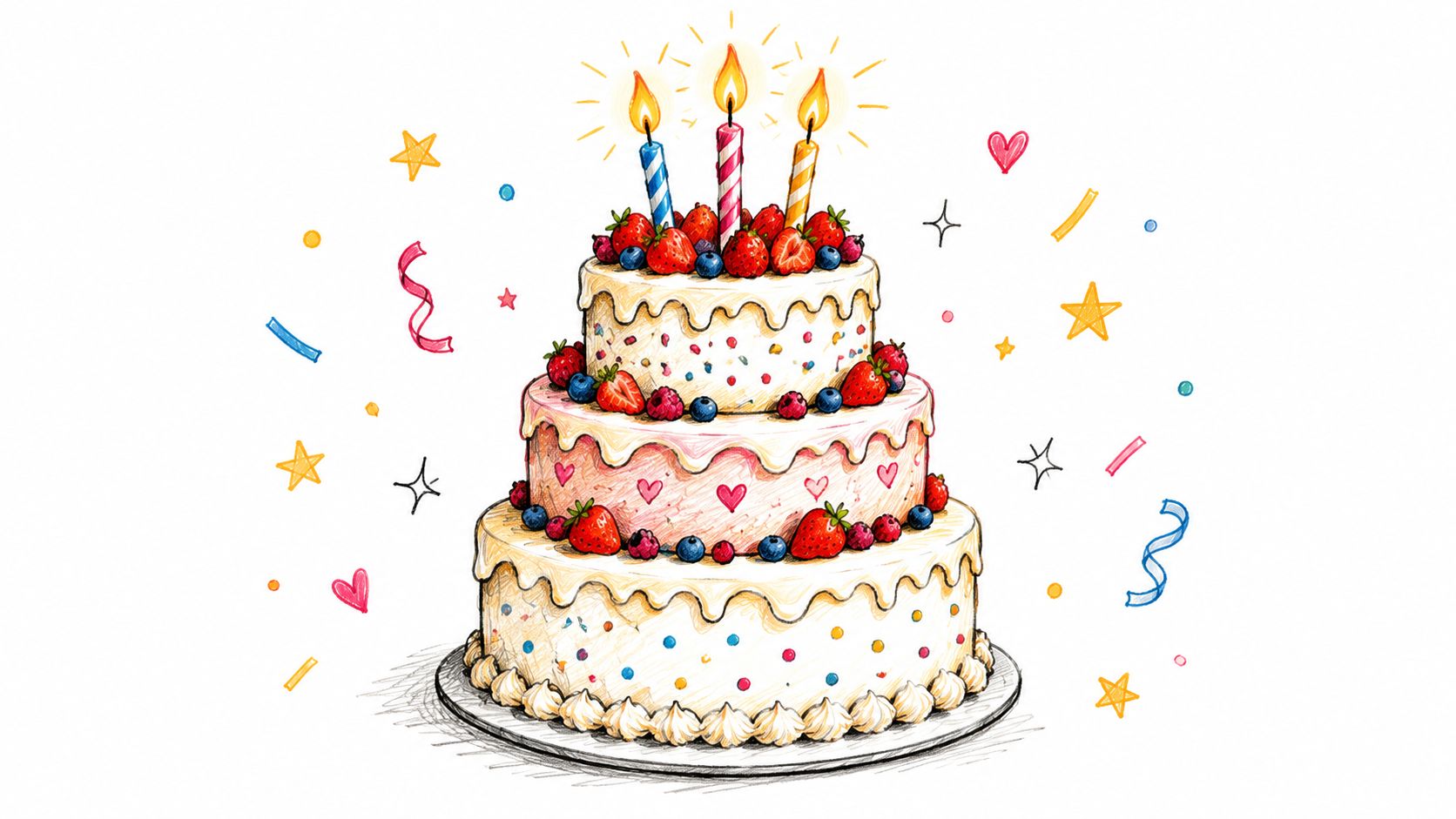
A cake makes a birthday greeting immediately legible. Lit candles mark the occasion even in a small social post, countdown, or printable card. A bakery can pair the image with a short birthday offer; a creator can set a stylized cake beside a selfie. The cake carries the occasion, while the caption or offer supplies the personal detail.
For a polished image, describe the frosting, candle glow, camera angle, background, and mood. A prompt such as “birthday selfie beside a softly glowing cake, warm candlelight, simple background” gives an image generator a clear subject and setting. Explore custom emoji creation ideas to shape a visual style that fits a greeting, invitation, or product design.
Practical rule: Keep the cake large enough to read at thumbnail size, and the greeting short enough not to compete with the candles.
Cake emoji artwork varies across platforms. Apple, Google, and emojidex have used white-frosted cakes with strawberries, while Microsoft and Facebook have shown chocolate-style versions (birthday cake emoji history). Build around the recognizable cues, frosting and candles, instead of relying on a detail that may change between displays.
For invitations and print, leave clear space for the name and event details. On social posts, let the caption add a personal message rather than repeating the greeting shown in the artwork. For a cake-centered event, check the wedding vs party cake serving sizes guide separately from the image design.
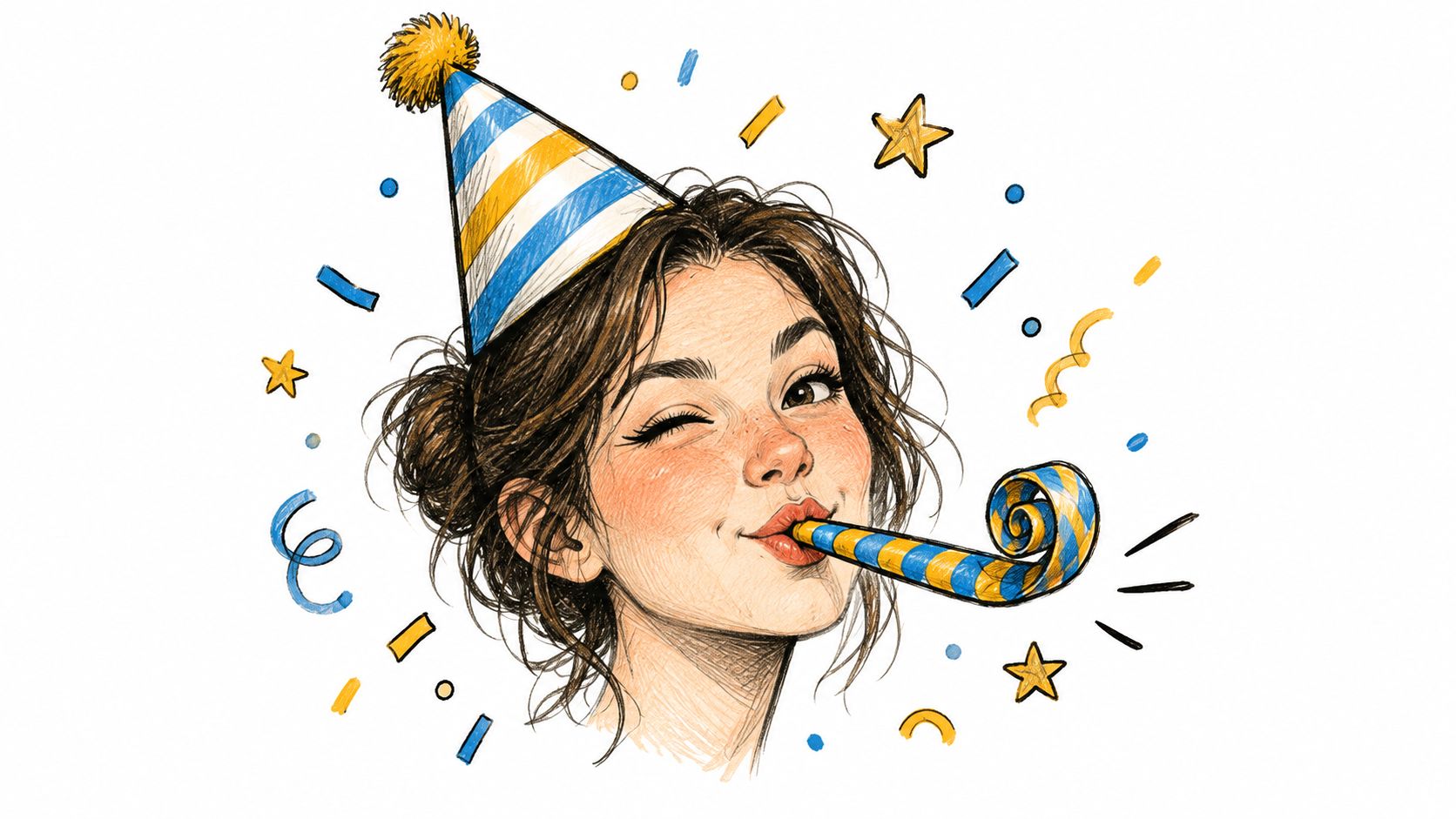
A cake says “birthday.” The partying face says “I'm excited about it.” Its party hat, noisemaker, and expressive smile make it a natural choice for reaction-led content, such as a creator celebrating on camera, a gamer announcing a birthday stream, or a brand turning a staff member into a festive mascot. The face carries more personality than a decorative object, so it suits content where the person or character should lead.
When you create a selfie transformation, name the details that make the symbol work: a striped hat, a party horn, a lively expression, and saturated colors. Keep the face prominent, especially in a vertical post where it may be viewed on a small screen. starryai's birthday photo-editing tool can be a starting point for exploring festive overlays and different visual treatments.
A real example: a streamer could announce a birthday broadcast with a stylized avatar wearing a party hat, then add the date and stream details as text outside the face. That gives the audience both the emotional cue and the practical information. For a personal birthday reel, the same emoji-inspired treatment can work as a visual reaction, with the caption supplying the greeting.
The main trade-off is tone. A large cartoon face can feel playful and approachable, but it may look too childish for a polished professional announcement. In that case, use the hat or noisemaker as a small accent, and keep the portrait and typography restrained.
A birthday post needs a clear focal point, but still feels flat? The party popper gives the design a sense of release: its tilted cone sends confetti and streamers outward. That emotional cue works well for announcement graphics, countdown endings, product launches for a brand birthday, and Etsy thumbnails for party prints. The Unicode emoji chart describes the familiar cone-and-streamers motif, while vendors vary its artwork.
Set the popper off-center so the burst sweeps through open space instead of obscuring a face, name, or headline. For an AI-generated image, specify the confetti's direction, background depth, and a clear area for text. Bokeh can separate the subject from the burst; a restrained palette keeps the streamers from competing with the message.
A good confetti burst points toward the birthday message. It shouldn't make the viewer hunt for it.
The popper can also signal congratulations or achievement, so a birthday graphic may need a headline that clarifies a second occasion, such as a promotion, business milestone, or graduation. Browse these celebration image ideas for other visual directions, then keep the birthday cue prominent if that is the main message.
For a countdown story, open with a calm portrait and end with a confetti burst. On a printed banner, use the popper's shape as a corner frame around the name. The story relies on a change in energy; the banner uses a static accent. Choose based on where the design will appear and how much space the message needs.
The balloon's emotional job is lighter than the cake's. It adds cheer without insisting on a particular kind of celebration, making it effective as a supporting detail in invitations, printable templates, and social graphics. One balloon can feel sweet and personal; a cluster can turn empty space into a party setting.
For a children's party invitation, try a cluster of balloons in colors that match the event theme, leaving a clear area for the time and location. For a small business, recolor balloon shapes to suit the brand palette instead of using an unrelated rainbow. In starryai, describe how the balloons should occupy the frame, whether they're floating behind a subject or arranged around a heading.

Balloons are easy to repeat, which is both an advantage and a risk. A small pattern can create a consistent invitation suite, but repeating the same motif across the background, border, and lettering can make the design feel busy. Choose one main role: border, background pattern, or focal accent.
Balloon-shaped text dividers can also create a playful break between a headline and party details. Keep the actual wording readable and don't use color as the only way to distinguish information. If you're preparing a printable for sale, check how the design looks in both color and grayscale before publishing.
A wrapped gift communicates anticipation, making it a strong choice when a birthday post introduces a reveal, giveaway, special offer, or surprise. A creator can show a box just starting to open before revealing a prize. An online shop can feature a gift illustration on a birthday sale banner or customer reward graphic.
Give the wrapping a clear role in the design. Choose a ribbon color that fits the brand or party palette, then specify whether the box is closed, open, or beginning to reveal its contents. A lifted lid suggests a surprise in a small thumbnail, but pair the image with a cake, candle, or birthday caption so the occasion stays clear.

For a birthday sale, an Etsy shop could make a stylized box the main image and place the offer in plain text beside it. A loyalty email could use the same visual to introduce a birthday gift code. In both cases, the illustration sets a celebratory mood; readable copy tells the recipient what the offer or surprise is. For invitations and merchandise, keep the gift motif distinct from the wording so it remains recognizable at different sizes.
A familiar gift symbol does not make another creator's complete illustration free to reuse. The U.S. Copyright Office's guidance for visual artists distinguishes familiar symbols from original visual compositions (Copyright Office guidance for visual artists). If you plan to sell merchandise featuring a gift illustration, confirm the artwork is your own composition rather than a traced emoji rendering.
A cupcake gives a birthday design a smaller, more intimate feel than a tiered cake. It can suit an individual birthday wish, a bakery's order announcement, a lifestyle creator's recap, or a printable made for a small gathering. Its compact shape also makes it easy to use as an icon beside a name or short greeting.
To make the occasion unmistakable, add a single lit candle or include a clear birthday phrase. You can direct an AI image prompt toward a frosting style, sprinkles, a cherry, and a soft background. Pastel colors can create a gentle look, while stronger contrast can make the cupcake stand out in a bakery post or product thumbnail.
A bakery might use a close-up cupcake image to announce birthday orders, with the ordering details in a separate, readable text area. An Etsy seller could carry the same cupcake motif through invitations, favor tags, and thank-you cards. Repeating the motif across related pieces creates consistency, but each design still needs enough space for its own purpose.
Design note: The cupcake can be the star in a personal greeting, but it needs a candle or birthday wording when viewers might otherwise read it as an everyday dessert.
Use a short overlay, such as “Happy birthday,” rather than packing the image with decorative text. If the graphic will be posted on different platforms, preview the artwork after export. Emoji designs and fonts may render differently across devices, so the important message should remain part of the image's readable text, not depend on the exact look of one emoji.
The piñata can make a birthday image feel specific rather than generic. Its decorated shape and vivid colors suggest a party tradition, so it can be a strong choice for a child's invitation, a cultural celebration post, or party-supply merchandise. Use it with care: a culturally rooted party element should feel intentional, not like a decorative token added without context.
A practical prompt might describe a custom piñata in the party's chosen colors, surrounded by streamers, with open space for the invitation text. If the audience and occasion make it appropriate, a short phrase such as “feliz cumpleaños” can provide context. A party shop could use a piñata illustration across invitations, favor labels, and matching merchandise, with a consistent palette tying the collection together.
The piñata is particularly useful when cake imagery doesn't represent the celebration the way you want. Birthday customs vary, so a single visual recipe won't feel equally familiar to every audience. A global analysis of emoji use found meaningful differences by geography and demographics, supporting localized testing rather than assuming one combination works everywhere (research on geographic emoji use).
Choose the details based on the people and event, not on a broad stereotype. Ask what the piñata means in this specific party context, and whether the intended audience will recognize that connection. When you're unsure, include clear wording or another local cue rather than expecting the symbol to explain itself.
The confetti ball is most effective as atmosphere. It can frame a birthday selfie, texture a banner, or add a burst behind an event announcement without becoming the central subject. Use it when the image already has a clear birthday focal point, such as a portrait, name, candle, or cake.
A social story could place a confetti burst behind a birthday selfie, keeping the face unobstructed. An event planner might use a restrained confetti pattern around the edges of an invitation, leaving a clean center for the details. In starryai, describe where the burst should sit and which areas must stay clear. Limiting the palette to a few coordinated colors can keep the image festive without making it visually noisy.
Confetti is easy to overuse. A full-frame scatter may look energetic on a story but can become cluttered on a printed invitation or merchandise design. Keep the densest burst near the edge or behind the focal subject, and include a cake or candle when the celebration needs to read specifically as a birthday.
A brand could use confetti as a background texture for a birthday campaign, then carry the same colors into the caption card or product image. For a personal post, a single burst can add excitement without requiring a large illustrated party scene. The symbol's strength is flexibility, but the message still needs to do the work of naming the occasion.
| Example | Visual Complexity 🔄 | Resource Needs ⚡ | Expected Impact 📊 | Ideal Use Cases 💡 | Key Advantage ⭐ |
|---|---|---|---|---|---|
| 🎂 Birthday Cake | Low; recognizable tiered cake | Minimal; check platform rendering | Clear birthday signal; familiar but common | Birthday greetings, countdowns, themed posts | Strongest birthday-specific recognition |
| 🥳 Partying Face | Medium; expressive face with hat and horn | Minimal; check platform rendering | Adds personality and excitement; less birthday-specific | Reels, reactions, creator or brand character art | Conveys emotion and energy |
| 🎉 Party Popper | Medium; streamers and confetti | Minimal; optional visual effects | Creates a lively, celebratory feel | Announcements, countdowns, achievement posts | Suggests motion in static designs |
| 🎈 Balloon | Low; simple shape and string | Minimal; recoloring is optional | Adds a light decorative touch; may look sparse alone | Invitations, borders, kids' party graphics | Scales well and works as a repeating motif |
| 🎁 Wrapped Gift | Medium; box, ribbon, and bow | Minimal; optional brand-color styling | Builds a sense of surprise; birthday context may need reinforcement | Giveaways, promotions, unboxing visuals | Strong association with gifts and offers |
| 🧁 Cupcake | Low; compact frosted dessert | Minimal; optional candle or text | Feels personal; may read as a general dessert | Bakery posts, individual greetings, printables | A friendly alternative to a full cake |
| 🪅 Piñata | Medium; colorful patterned design | Minimal; check availability on older devices | Distinctive and culturally expressive; recognition varies | Children's parties, culturally themed celebrations | Stands out from more common symbols |
| 🎊 Confetti Ball | Medium; dense confetti and streamers | Minimal; limit detail for small formats | Creates a festive background; can appear cluttered | Banners, story overlays, invitations | Works well as a texture or overlay |
A birthday graphic works best when each emoji has a clear emotional job. Let one symbol establish the occasion, add a second for energy, then use a contextual detail, such as a candle, name, or short greeting, to make the design personal. A cake with a name feels like a direct greeting; a gift beside an offer signals a promotion; a piñata paired with culturally relevant wording can reflect a particular party tradition.
Keep the palette limited and the focal point clear. Shrink the design to thumbnail size before publishing. If the birthday message disappears, simplify the layout or strengthen the text. This check matters for TikTok covers, Instagram posts, shop listing images, and invitation previews, where people may see the artwork briefly or at reduced scale.
For AI image generation, describe the emoji's shape, color, lighting, placement, and mood rather than entering only its name. For example: “Gold cone tilted to the side, confetti streaming behind a portrait, open space for a birthday headline.” That gives the generator clearer visual direction than “party popper birthday.” Treat the image as a starting point, then review the typography and layout yourself. Check every character in names, dates, and offer terms before using generated text.
A design also needs to work beyond its visual style. Include plain-language birthday text, maintain readable contrast, and add alt text when posting an image. Check how emoji colors and facial expressions appear across operating systems, since the same symbol can look different from one platform to another. The image should remain understandable even when decorative details vary.
For commercial projects, build an original composition and confirm that every asset is yours or licensed. A familiar emoji shape does not make a traced illustration reusable. Apply that check to social posts, invitations, and merchandise concepts before publishing.
Choose the emotional job first, then give each symbol a supporting role. Use starryai to explore birthday visuals from selfies, text prompts, and emoji-inspired ideas. Try a cake-led greeting, a confetti portrait, or a culturally specific party concept, then refine the composition for a social post, invitation, or merchandise design.


.svg)